Let us discuss the Blue winged Parrotlet sometimes called the cobalt rumped parrotlet.
This small parrot from South America is easily recognizing for its bright look and active nature. It regularly reminds people of lovebirds because of its energetic and playful behavior.
This bird can make a wonderful long term friend bringing joy to its owner for many years with proper care and attention.
What is a Blue Winged Parrotlet?
As we know the blue winged parrot is a small parrot species native to South America. It particularly found in Brazil and surrounding areas. It is part of the parrotlet family often nicknamed pocket parrots because of its compact size.
Also Read: Yellow Faced Parrotlet and its Lifespan, Care, Size, Diet, and Facts
They are generally green birds highlighting by striking blue feathers on their wings particularly in males. With their small bodies and active nature. They are widely admired as one of the most popular small parrots.
Blue Winged ParrotletBreed – Overview
As we know native to regions from eastern Panama to northern Argentina, Blue winged Parrotlets inhabit forest edges, savannas and shrublands. It measuring 12-14 cm and weighing 28-30 g.
They are mostly green with the typical parrot zygodactyl feet. Males display bold blue markings on their wings and rump, whereas females have a uniform yellow green forehead and body. Juveniles closely resemble adults but are generally greener.
Blue Winged ParrotletLifespan
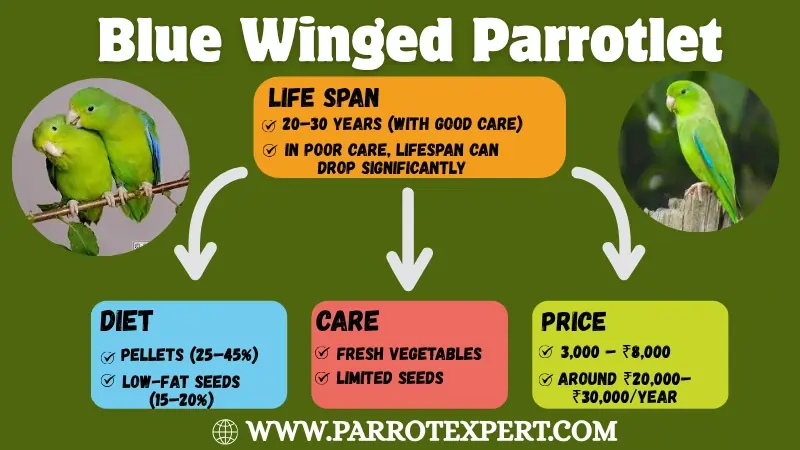
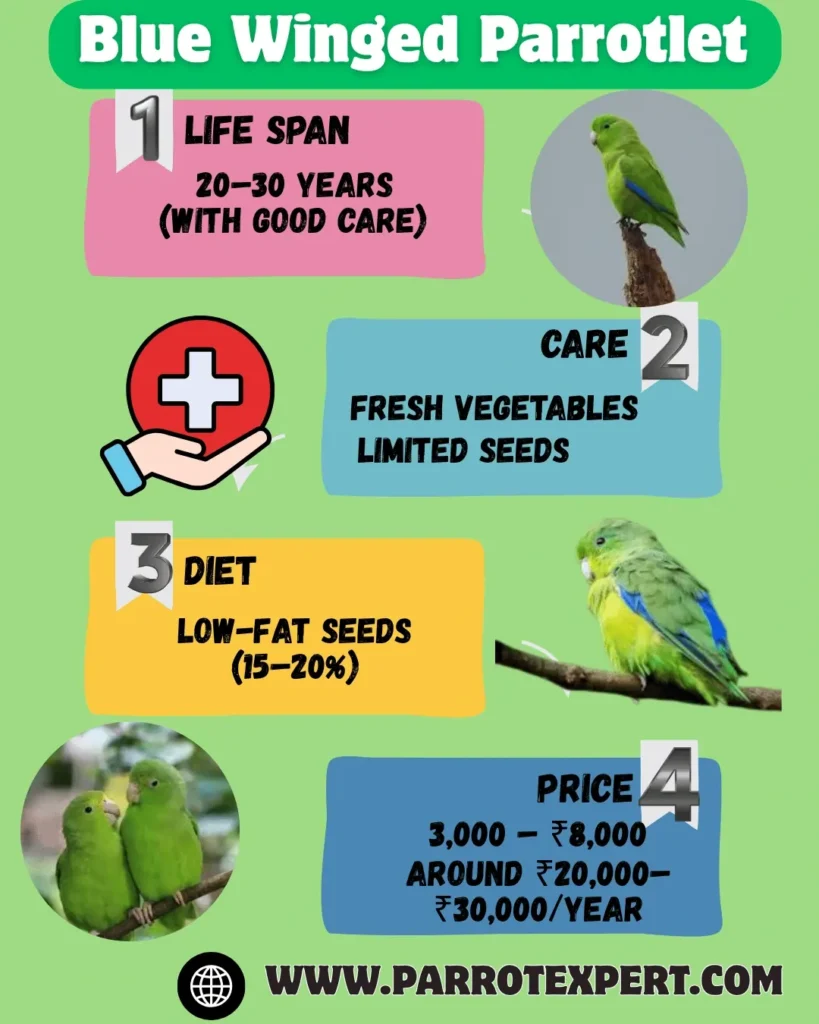
It is known Blue winged Parrotlets typically live 15-20 years in captivity. It individuals reaching 25-30 years. The combination of predators and habitat loss limits how long wild birds survive.
Key elements for a long life include proper nutrition, consistent daily attention and routine avian vet care to avoid stress and health problems.
Blue Winged ParrotletCare Essentials
Let’s define Blue winged Parrot happy and healthy. Its gives a large cage minimum 60×60×60 cm bigger is better for flying with natural perches, swings and fun toys made of wood, leather or string. Its gives fresh water daily for bathing.
Also Read: Dusky Billed Parrotlet and its Lifespan, Care, Size, Diet, and Facts
It’s made sure the cage is getting to place in a cozy draft free location, out of sunlight and kitchen smoke, and switch up toys weekly to keep your parrot stimulated. It manages your parrot daily from a young age to support gentleness.
After forming a pair bond these birds may become more focused on each other and less loving toward you.
It maintains feather quality by misting twice a week and ensure yearly veterinary checkups to prevent mites and respiratory issues.
Blue Winged ParrotletDiet Needs
As we know balanced diet for Blue winged Parrot should add roughly, high quality pellets, fresh vegetables like broccoli, beans, zucchini, kale and silver beet and fruits and seeds. It is known leafy greens, peas, corn, carrots and occasional protein sources such as cooked egg or beans are healthy additions.
Its limit nuts and seeds to prevent fatty liver disease. Sprouts, millet sticks and a cuttlebone provide extra enrichment and calcium. Fresh water should always be available and when transitioning from a seed based diet do so gradually over eight weeks.
Blue Winged ParrotletPrice Range
Let’s talk about Blue winged Parrot usually sell for $200–$400 hand-fed, with breeder birds or rare mutations priced at $500–$800. Breeding females may cost a bit more.
It expects annual expenses of $300–$500 for food, toys and vet care.
Blue Winged ParrotletHealth & Behavior
It is knowing the watch your parrot for puffed up feathers, weight loss or tail bobbing. Its gives chew toys to trim beaks nails naturally, which can mean it’s sick or has breathing problems.
Blue Winged Parrotlet Female
Let’s define the female of the Blue winged Parrot species has subtle differences in appearance compared to the male.
Also Read: Green Rumped Parrotlet and its Lifespan, Diet, Care, and their Facts
Key Differences:
Females usually have less or no blue markings on wings
Slightly duller color compared to males
Similar size and behavior
Although females may appear less colorful, they are equally intelligent and make wonderful pets.
Is Blue Winged Parrotlet a Good Pet?
As we know Blue Winged Parrot makes a good friend for anyone intense about birds.
👍 Pros:
- Small and easy to manage
- Intelligent and trainable
- Strong bonding with owners
- Less noisy than large parrots
👎 Cons:
- Can be territorial
- Needs daily attention
- needs training and socialization
- They are ideal for individuals who can devote time to interaction and proper care.
Blue Winged Parrotlet Facts
Here are some interesting Blue Winged Parrotlet facts:
Also Read: American Parrotlet and its Lifespan, Diet, Care, & Facts
- They are one of the smallest parrot species in the world
- Known as “pocket parrots” because of their tiny size
- Highly intelligent and can learn tricks
- Males have more visible blue wing patches than females
- They can mimic sounds and simple words
- These birds are curious, active and love to learn their surroundings.
Bottom Lines
At the final, Blue winged Parrot is an active and charming small bird that offers both joy and friend to its owner. It’s learning about its lifespan and giving proper care needs commitment. The rewards of owning one are well worth the effort.
Also Read: Amazonian Parrotlet and its Lifespan, Personality, Food, Care, & Facts
As we know its gives a proper diet, plenty of attention and a suitable environment. the Blue winged Parrot can grow and become a good friend. Whether you’re new to bird keeping or experienced, this lovely small parrot is a good choice
As we know the many people love these birds for their vibrant colors and charming personalities. If you’re willing to spend a little extra time finding o a Yellow faced Parrotlet can make a wonderful addition to your home.
Do you have any experience, tips, tricks, or query regarding this issue? You can drop a comment Facebook or Instagram just here!
Have a Nice Day!