The Military Macaw is an intelligent large parrot species. Its scientific name is Ara militaries and it belongs to the family Psittacidae. This colorful bird gets its name from feathers that look like military uniforms. It also has red, blue and black feather patterns. Military Macaws live naturally in parts of Central and South America.
They prefer forests, woodlands, cliffs and other suitable habitats. These birds are very social. Show strong intelligence. They communicate using calls, squawks and different vocalizations. Their powerful beaks help them crack seeds and hard nuts.
Their strong feet help them handle food easily. With care Military Macaws can become affectionate companions. However they need a lot of attention, space, mental stimulation and long-term commitment.
Military Macaw Bird Facts
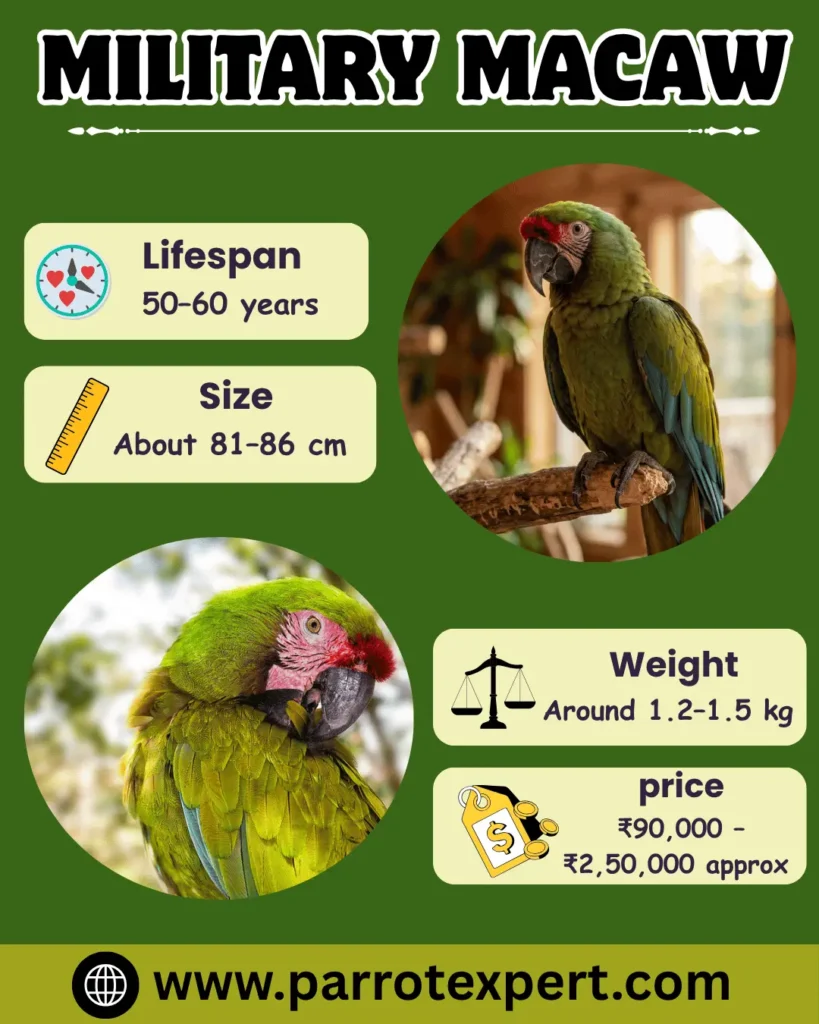
| Size | 31 Inches |
| Lifespan | 60+ Years |
| Bird Species | Macaw |
| Colors | Green, Yellow Tones Blue Details |
| Sounds | Mimicking Talkative Loud |
| Interaction | Social Friendly Playful |
| Comparable Breeds | Hyacinth Macaw, African Grey Parrot |
Behavior & Personality
Military Macaws are social birds. In the wild they live in pairs or flocks of up to twenty individuals. As pets they keep this trait. Can be friendly. They may have mood swings. They are birds and need constant enrichment and attention.
Read More: Green Winged Macaw: Lifespan, Diet, Care, Size, Price, & Facts
Without it boredom can lead to health problems. These Parrots Bond Closely to One Person. Training and socializing early can help them get used to others. If not they may bite people they don’t like. Paying attention to their body language can prevent trouble.
Military Macaw Size and Weight
Military Macaws are among the parrot species. Adults grow around 70 to 80 centimetres long. Their wingspan usually reaches 99 to 110 centimetres. Adults typically weigh 900 grams though some vary. Males and females look very similar. So visual identification cannot reliably tell their sex apart.
Military Macaw Lifespan
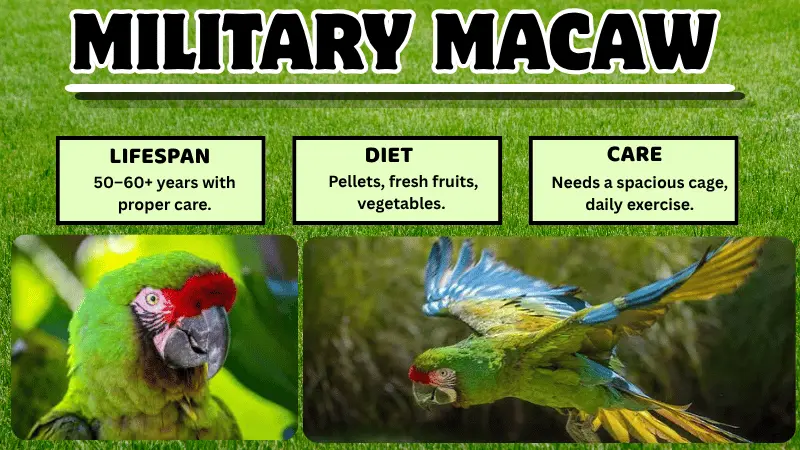
These birds can live for decades with good care. In captivity they may reach fifty years or more. Animal Diversity Web records a captive lifespan of about 54 years.
Read More: Blue and Yellow Macaw: Lifespan, Diet, Care, Price, & Facts
Some sources say they can live to sixty years. Keeping a Military Macaw means making a long-term commitment. Owners should plan for housing, money and vet care.
Care and Feeding
To keep a Military Macaw commercial seed and pellet mixes should be supplemented. Add plenty of fruits, berries and green vegetables. Occasionally give foods like rice, chicken and corn.
These parrots love to bathe. Continuous showers help keep their feathers shiny, moist and healthy. Good hygiene keeps them happy and well. Taking care of their condition helps maintain a healthy bird.
Common Conditions
These large parrots are naturally strong and resilient. With care they can live 60 years or more without major illness. Watch for signs like apathy, loss of appetite, diarrhea or feather plucking. These may mean something is wrong.
A big part of keeping a Military Macaw satisfied and healthy is giving them space to fly, exercise and play. Don’t keep them locked all the time. The best way to give them a bath is to take them into the shower with you. Once they get used to it they will appreciate it.With a lifespan of up to sixty years the Military Macaw can become a friend and companion.
Military Macaw Cage Requirements
A Military Macaw needs a sturdy cage. The cage must allow movement and wing stretching. It should include perches with different thicknesses. Natural wooden perches give foot exercise. Safe branches satisfy their urge to chew.
Read More: Cuban Macaw: Lifespan, Size, Extinct, Sale, and Facts
Toys should include puzzles, materials that can be shredded and tough chew options. Rotate toys regularly to keep things interesting and stop boredom. Clean the cage often to keep an environment. Food and water bowls need cleaning too.
Military Macaw Training
Training improves communication between owners and their macaws. Short sessions work better than ones. Positive reinforcement makes behaviours stronger without using fear. Good treats, words of praise and giving attention help reward success.
Avoid punishment because it breaks trust. Instead use routines so the bird knows what to expect. Basic training includes stepping up returning to the cage and targeting. Advanced training can teach tricks and speech imitation.
Military Macaw Conservation Status
The Military Macaw faces conservation threats across its range. Habitat destruction reduces places where wild populations can live. Illegal wildlife trade adds pressure on birds. The species now gets conservation attention due to risks.
Read More: Hyacinth Macaw Parrot: Species, Size, Lifespan, Diet, and Facts
Protecting forests helps preserve feeding and nesting areas. Responsible ownership must follow rules about wildlife. People should obtain birds through lawful and ethical ways. Wild-caught birds cause conservation and welfare problems. So anyone considering owning one should check documents and laws carefully.
Military Macaw vs Green-Winged Macaw
Military Macaws mainly have feathers with blue flight feathers. Green-Winged Macaws usually have more red on their bodies. Military Macaws appear slimmer and smaller overall.
Green-Winged Macaws can grow up to ninety centimetres. Both have beaks and good climbing skills. Both need lots of space and mental stimulation. Their color make it easy to tell them apart visually.
Buffon Macaw vs Military Macaw
Buffon’s Macaw is generally bigger. Has brighter green feathers. Military Macaws are slightly smaller with green plumage and noticeable blue flight feathers.
Both are smart, social, loud and long-lived. Buffon’s Macaw likes humid forests. And, Military Macaws live in woodland and forest areas across Latin America.
Military Macaw vs Great Green Macaw
Military Macaws and Great Green Macaws are large intelligent parrots. And, Military Macaws have feathers with red foreheads and grow 70–75 cm. Great Green Macaws are bigger reaching 85–90 cm with green feathers and blue markings on their wings.
Read More: Severe Macaw: Lifespan, Size, Care & Diet, Price, and All Facts
Military Macaws live in forests and mountainous regions. Great Green Macaws prefer lowland forests. Both need spaces, social interaction, fun activities and special care.
Is Military Macaw a Good Pet?
Military Macaws can be. Interactive pets. They suit experienced owners who understand their needs. Their large size means demands for housing and care. And, their loud calls might disturb homes. Their brains require training, fun and human contact.
They also need financial support for vet visits and food. So anyone thinking about getting one should study these requirements first. Responsible ownership, ownership always puts animal welfare before looks or trends.
FAQs (Frequently Asked Questions)
Bottom Lines
The Military Macaw is an intelligent parrot from the New World. Its green feathers make it stand out and look striking. And, its strong beak helps it feed, climb, explore and act naturally. Its cleverness makes mental enrichment important throughout its life.
Wild populations face threats, from habitat loss and capture. So conservation efforts are crucial. Anyone thinking about owning one should know how demanding these birds are. With the knowledge these impressive macaws deserve respectful and responsible care.
If this article is valuable for you, then please share it along with your friends, family members, pet lovers or relatives over social media platforms like as Facebook, Instagram, Linked In, Twitter, and more.
Do you have any experience, tips, tricks, or query regarding on this? You can drop a comment!
Have a Nice Day!