This type of macaw is a parrot that always shows an interesting personality. This beautiful bird draws attention with its looks. In addition the Chestnut-Fronted Macaw is smart which makes it popular among bird lovers. Many people also admire the Chestnut-Fronted Macaw’s social nature.
In this article we look at the Chestnut-Fronted Macaw’s habitat, diet and traits. We also learn about the Chestnut-Fronted Macaw’s lifespan, behavior and care. Let us discover everything about the Chestnut-Fronted Macaw.
What Is a Chestnut-Fronted Macaw?
The Chestnut-Fronted Macaw is a species of parrot family. Its scientific name is Ara Severus, a recognized species. People also call this bird the Severe Macaw. The Chestnut-Fronted Macaw is a macaw species that lives across South America.
Read More: Red Fronted Macaw: Lifespan, Size, Diet, Care, Price and Facts
Unlike macaws the Chestnut-Fronted Macaw has a compact body. However the Chestnut-Fronted Macaw’s intelligence and personality are just as impressive. The Chestnut-Fronted Macaw also builds bonds with familiar human companions.
Appearance & Physical Characteristics
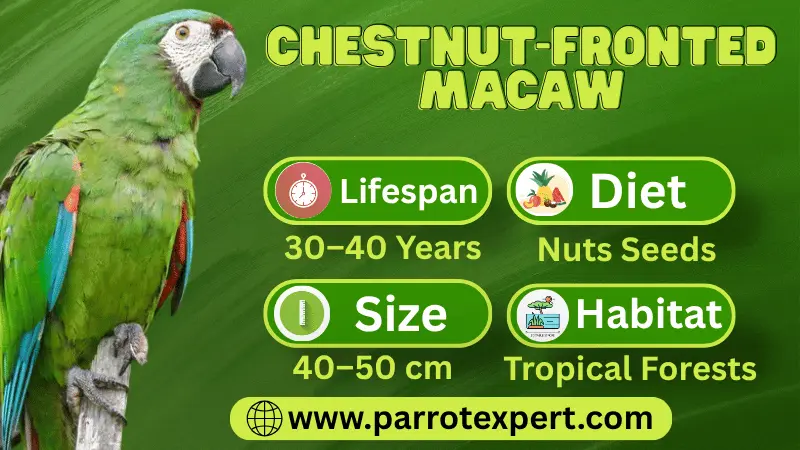
The Chestnut-Fronted Macaw shows green feathers all over its body. Its forehead has chestnut-brown feathers above the eyes. The Chestnut-Fronted Macaw’s wings display blue and red markings.
The Chestnut-Fronted Macaw’s tail is long, colorful and slightly pointed. Chestnut-Fronted Macaw’s facial skin is mostly bare and light-colored. These features give the Chestnut-Fronted Macaw a look.
Here are some important physical characteristics:
Body Color: bright green feathers across its body.
Forehead: Distinctive chestnut-brown feathers create its signature look.
Read More: Blue Throated Macaw: Habitat, Lifespan, Diet, Care, & Facts
Wings: Blue and red feathers add beautiful color contrasts.
Tail: Long tail feathers often display green and blue
Beak: Their strong black beak helping them in cracking hard nuts.
Eyes: As the Chestnut-Fronted Macaw grows up older, its irises become lighter colour.
Chestnut-Fronted Macaw Size & Weight
The Chestnut-Fronted Macaw has a compact macaw body. In adult Chestnut-Fronted Macaws measure about 45–50 centimeters in length. Their weight usually ranges between 300 and 400 grams.
However individual Chestnut-Fronted Macaws can vary in size. The Chestnut-Fronted Macaw’s strong body supports climbing, flying and food handling. The Chestnut-Fronted Macaw therefore needs space for everyday physical activities.
Natural Habitat and Distribution
The Chestnut-Fronted Macaw naturally lives along with the South America. They are distribute in some countries includes tropical countries such as Brazil, Bolivia, Colombia, Ecuador and Peru.
Read More: Great Green Macaw: Lifespan, Size, Diet, Care, and Facts
The Chestnut-Fronted Macaw likes to live in forests, woodlands and along rivers because they offer protection. These Macaw can also be seen in savannahs and even in the forest areas. These environments give the Chestnut-Fronted Macaw places to nest and also food that comes from nature for their survival.
The Chestnut-Fronted Macaw usually spends a lot of time among tree branches. The Chestnut-Fronted Macaw uses its beak for climbing. Chestnut-Fronted Macaw’s natural habitat also offers chances for interaction.
Chestnut-Fronted Macaw Diet & Feeding
The Chestnut-Fronted Macaw diet is mainly made up of plants. In wild, the Chestnut-Fronted Macaw looks for fruits and seeds. The Chestnut-Fronted Macaw also eats nuts, berries and flowers to get the nutrients it needs.
The Chestnut-Fronted Macaw’s powerful beak helps them to crack foods. Pet owners should give the Chestnut-Fronted Macaw appropriate meals. The Chestnut-Fronted Macaw needs food to stay strong and to show beautiful feathers.
Chestnut-Fronted Macaws like the following foods are given below:
These Macaws enjoy vegetables such as carrots, broccoli and bell peppers.
These Macaws love to eat fruits such, as apples, papaya, berries and bananas.
They can have nuts, such as walnuts and almonds only in moderation.
Chestnut-Fronted Macaws benefit, from quality formulated pellets made for companion parrots.
Clean drinking water available every day.
Avoid chocolate, avocado, alcohol and salty foods from Chestnut-Fronted Macaw. Also never give the Chestnut-Fronted Macaw caffeine or foods with ingredients.
Chestnut-Fronted Macaw Personality & Behavior
The Chestnut-Fronted Macaw has a curious personality. These birds show interest in new things that are surrounding. I have watched the Chestnut-Fronted Macaw love to investigate items, toys and Chestnut-Fronted Macaw surroundings. Chestnut-Fronted Macaw learns through interaction.
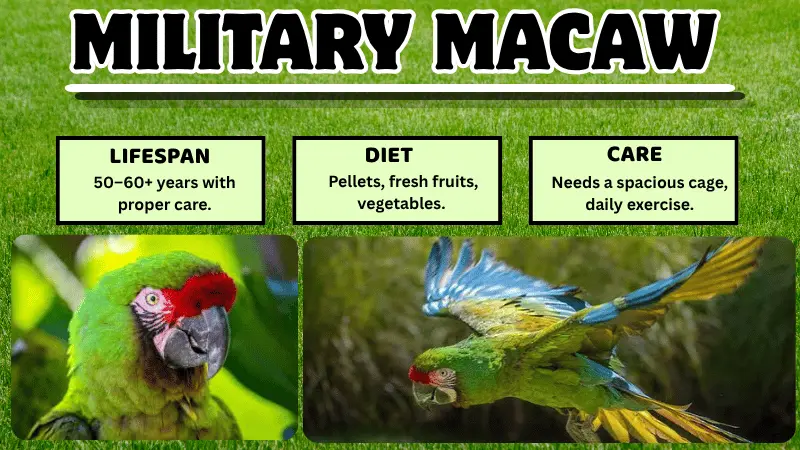
Read More: Military Macaw: Lifespan, Size, Diet, Care, Price, & Facts
We have seen the Chestnut-Fronted Macaw often build bonds with people. We have noticed the Chestnut-Fronted Macaw needs attention and positive social experiences. If the Chestnut-Fronted Macaw is not stimulated it may develop boredom-related problems.
The Chestnut-Fronted Macaw’s playful nature makes daily enrichment very important. Therefore owners should give the Chestnut-Fronted Macaw toys and climbing opportunities.
Chestnut-Fronted Macaw Lifespan
The Chestnut-Fronted Macaw can enjoy a long life. Many captive Chestnut-Fronted Macaws live around 30–40 years. The Chestnut-Fronted Macaw’s lifespan depends on genetics and everyday care. A balanced diet supports the Chestnut-Fronted Macaw’s long-term health and development.
Regular visits, to the vet help the Chestnut-Fronted Macaw find health issues early. Good exercise also helps the Chestnut-Fronted Macaw stay strong and healthy. Anyone who wants to bring a Chestnut-Fronted Macaw home must know that caring for a Chestnut-Fronted Macaw is a long term job.
Chestnut-Fronted Macaw Talking Ability & Intelligence
Chestnut-Fronted Macaw possesses learning ability. Some Chestnut-Fronted Macaws can copy words and sounds that’re familiar. The talking skill of each Chestnut-Fronted Macaw is very different.
Read More: Green Winged Macaw: Lifespan, Diet, Care, Size, Price, & Facts
Chestnut-Fronted Macaws learn by repeating and by rewards. Short training sessions help the Chestnut-Fronted Macaw talk better. Regular interaction also makes the bond between Chestnut-Fronted Macaw and owner stronger. Owners should remember that not every Chestnut-Fronted Macaw will talk.
Chestnut-Fronted Macaw Breeding and Reproduction
We have seen Chestnut-Fronted Macaws often pair up during the season of breeding. They choose cavities inside mature trees. These nests protect the growing chicks of Chestnut-Fronted Macaws.
Chestnut-Fronted Macaw females lay two or three eggs. Incubation lasts about 26 to 28 days. Both Chestnut-Fronted Macaw parents help raise the babies.
The young Chestnut-Fronted Macaws grow feathers. Learn to move on their own. Those intending to Breeding Chestnut-Fronted Macaws must possess knowledge and have access, to veterinary services.
Chestnut-Fronted Macaw Care & Housing Requirements
We think providing a habitat helps keep the Chestnut-Fronted Macaw healthy. The cage must let the Macaw move freely and stretch its wings. A range of perches helps the Chestnut-Fronted Macaw stay active and stretch its feet.
Read More: Blue and Yellow Macaw: Lifespan, Diet, Care, Price, & Facts
Regular movement keeps the Chestnut-Fronted Macaw’s muscles healthy and the Chestnut-Fronted Macaw’s coordination strong. The Chestnut-Fronted Macaw may also wander outside its enclosure for a period when someone watches. We must ensure there are no safety hazards, in the area before the Chestnut-Fronted Macaw can move freely.
Give the Chestnut-Fronted Macaw enrichment to keep it active and sharp. For example put puzzles chew toys and climbing structures in the cage. Clean the cage regularly to keep the Chestnut-Fronted Macaw’s home healthy.
Is the Chestnut-Fronted Macaw a Good Pet?
Chestnut-Fronted Macaw can be a companion. The Chestnut-Fronted Macaw’s intelligence and playful nature draw expert bird owners. Chestnut-Fronted Macaw needs a lot of attention and dedication.
The Chestnut-Fronted Macaw can make calls during normal talk. So living in an apartment can cause noise problems. Also owners who are new may find the Chestnut-Fronted Macaw’s demanding behavior to handle.
Before adopting a Chestnut Fronted Macaw study the Chestnut Fronted Macaw’s care needs. Then look at wildlife laws and legal rules, for owning a Chestnut Fronted Macaw. Pick breeders who follow conservation rules and act responsibly.
Interesting Facts about Chestnut-Fronted Macaws
Here are some facts about this beautiful parrot:
Read More: Hyacinth Macaw Parrot: Species, Size, Lifespan, Diet, and Facts
1. Chestnut-Fronted Macaw also goes by the name Severe Macaw.
2. Chestnut-Fronted Macaw belongs to the group that people call macaws.
3. Chestnut-Fronted Macaw’s scientific name is Ara Severus.
4. Chestnut-Fronted Macaw has chestnut‑brown feather marks on its forehead.
5. Chestnut-Fronted Macaw adults are 40 to 49 centimeters long.
6. Chestnut-Fronted Macaw has a beak that can break hard seeds and nuts and we find that impressive.
7. Chestnut-Fronted Macaw usually travels in pairs or groups. we notice they do this often.
8. Chestnut-Fronted Macaw eats fruits, seeds and flowers in the wild. we see this when we visit the forest.
9. Chestnut-Fronted Macaw can copy some words. Sounds from its environment and we have heard it mimic my voice.
10. Chestnut-Fronted Macaw can live than thirty years if it gets good care.
FAQs (Frequently Asked Questions)
Final Thoughts
Chestnut-Fronted Macaw is smart and fascinating. Its bright feathers and playful nature draw bird lovers. In addition Chestnut-Fronted Macaw’s great learning skill makes it very interesting.
This beautiful Chestnut-Fronted Macaw needs careful care. Good food, a home and enrichment keep it healthy. So knowing all Chestnut-Fronted Macaw needs is vital, before thinking about ownership.
Keeping habitats safe also helps wild Chestnut-Fronted Macaw populations. Careful conservation protects these parrots for people who come after us.
If this article is valuable for you, then please share it along with your friends, family members, pet lovers or relatives over social media platforms like as Facebook, Instagram, LinkedIn, Twitter, and more.
Do you have any experience, tips, tricks, or query regarding on this? You can drop a comment!
Have a Nice Day!