
The Red Fronted Macaw is a colorful parrot that comes from Bolivia. The red part on the front of its head looks very bright against the part of its body. Even though this bird is smaller than other macaws it gets a lot of attention.

However the wild population of this bird is in trouble because of what people do. Learning about this bird helps people understand how to take care of animals.
What Is a Red Fronted Macaw?
The fronted macaw is part of the parrot family called Psittacidae. Its scientific name is Ara rubrogenys, by which people know this special bird. Bird lovers also know it for the markings on its face. Unlike macaws this bird has a small body. Still it shows the smartness and curiosity that macaws usually have.
Read More: Blue Throated Macaw: Habitat, Lifespan, Diet, Care, & Facts
Adult fronted macaws are about 55 to 60 centimeters from head to tail. They weigh between 425 and 550 grams. They have curved beaks that every time help them break open seeds. Their feet also help them climb trees and hold food. These body features help them do their activities and stay alive.
Red-Fronted Macaw Behaviour & Personality
Fronted macaws are social birds that often travel together. They usually are in pairs, family groups or small groups. Their loud sounds help them talk across areas. They also use sounds to warn others about dangers. Also birds that are paired may get closer by grooming each other’s feathers.
These smart parrots like to climb look around. Play with different things. Their strong beaks allow them to check out branches and food. They might also play with birds when they rest. These actions help scientists understand their smart abilities.
Read More: Great Green Macaw: Lifespan, Size, Diet, Care, and Facts
In homes fronted macaws need a lot of attention and daily fun activities. They need places to live safe things to climb and good toys. And their smartness also means that they can get bored quickly. Taking care of them properly needs a time patience and help from a bird doctor.
Red-Fronted Macaw Colors
The fronted macaw has mostly green feathers all over its body. The front part of its head has a red or orange-red area. There are also marks behind the eyes and on the shoulders. The legs also have feathers that make this bird special. Meanwhile the wings and tail have turquoise feathers.
Its face has skin with fine lines of feathers around the eyes. The bird also has a dark beak and orange eyes. All these parts together make a nice look. Young birds usually have red than grown-up birds. As they grow the red parts on their head and body become clearer.
Male and female fronted macaws look very similar in how they look. So just looking at them is not enough to tell which is which. DNA tests or a bird doctor can help find out the sex.
Red Fronted Macaw Lifespan
The fronted macaw lifespan can be up to 25 to 40 years. This depends on how they live and how healthy they’re. If they have food, big places to live, exercise and regular check-ups they can live longer.
Read More: Military Macaw: Lifespan, Size, Diet, Care, Price, & Facts
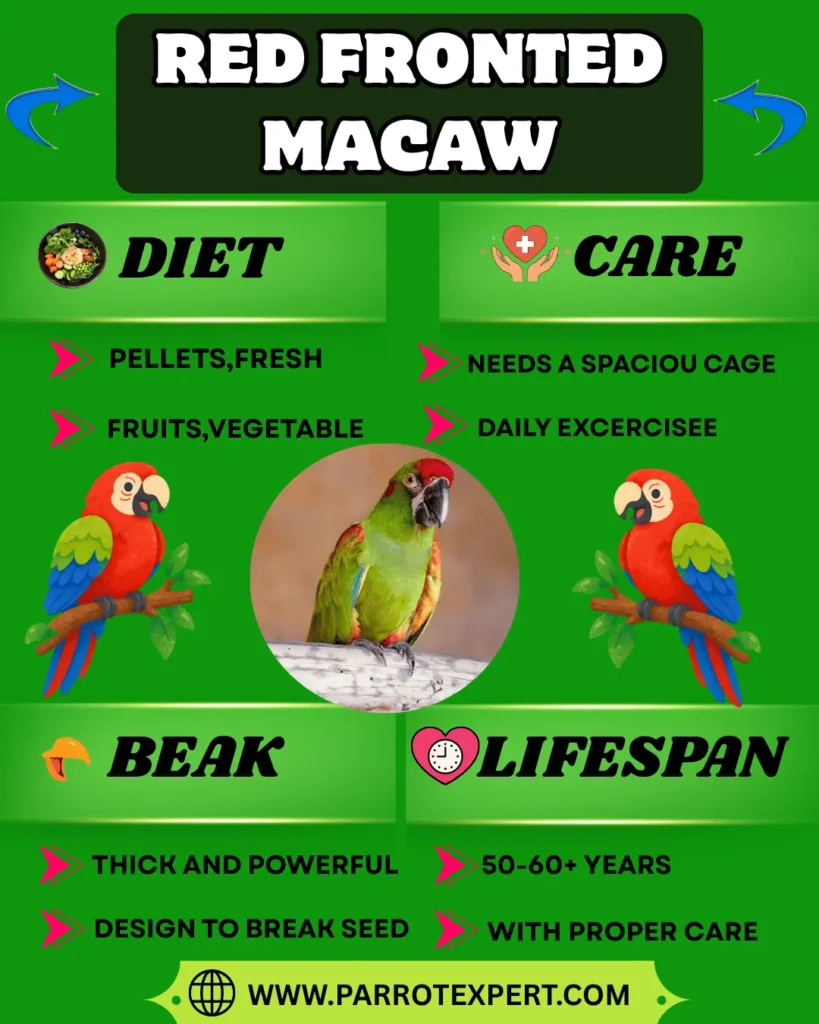
In the wild dangers like animals that eat those losing places to live not having food and other problems can affect how long they live. A good diet, mental fun and proper care help these rare birds from Bolivia live a longer life.
Red Fronted Macaw Size
The fronted macaw size is usually between 55 and 60 centimeters. This includes the tail. Adults usually weigh about 425 to 550 grams.
This sized macaw has a green body, a bright red front, blue feathers on the wings and a long tail that helps with balance when they fly.
Red-Fronted Macaw Habitat
The fronted macaw lives naturally in central Bolivia, South America. Its home includes parts of Cochabamba, Santa Cruz, Chuquisaca and Potosí. These areas have valleys and mountainous places with few plants. The birds like areas with plants, cactus forests and scattered trees.
Read More: Green Winged Macaw: Lifespan, Diet, Care, Size, Price, & Facts
Unlike parrots that live in rainforests this bird can live in places. Cacti and local trees give them food through their home. Steep river cliffs also give those places to nest and rest. So keeping these places safe is very important for survival of these spices.
Fronted macaws usually stay in their home area. They may move around a little when looking for food that is in season. Their movement depends on what food’s there and what they need to breed.
What Does Red-Fronted Macaw Eat? Good Diet
These species eating diet is seeds, fruits, nuts and plants including fruits from cacti and beans. These foods give them energy for flying, eating and having babies. Also they sometimes eat grasses and other plants when they are available.
Unfortunately when there is not natural food these birds sometimes go to farmland. They eat corn and peanuts that farmers grow. Even though these give them food this behavior can cause problems. Farmers might see the birds as bad because they damage crops. So conservation groups try to find ways to protect both people and the birds.
Read More: Blue and Yellow Macaw: Lifespan, Diet, Care, Price, & Facts
In homes fronted macaws need a good mix of food that is right for them. A good plan might include food and some vegetables. A little bit of fruits and nuts can add variety. Owners should ask a bird doctor about what they need, For maintaining their good health providing them fresh water and regular eating times.
Can You Keep a Red-Fronted Macaw as a Pet?
Fronted macaws need special care and a long time to take care of them. Their smartness, noise and energy need care. They also need places to live fun things to do good food and a bird doctor’s help. So they do not fit people who want a bird that’s easy to take care of.
Anyone thinking about having one Red-Fronted Macaw as a pet should first check what the laws are about animals in their area. There are rules about trading these birdsunder CITES Appendix I. Buyers should check if the bird has the papers and is from a legal source. Do not buy birds from people who cannot show they are allowed to sell them.
Conservation should be very important when thinking about this bird. Helping conservation groups can help protect wild birds. Being an owner always starts with following the rules and caring about the bird.
Fronted Macaw Price & Sale
The fronted macaw price changes depending on if it is allowed to be sold where it came from and if it has papers. Some online listings say it costs thousands of euros. You need to check yourself.
Read More: Hyacinth Macaw Parrot: Species, Size, Lifespan, Diet, and Facts
This bird is in trouble and is under CITES Appendix I rules for trade. Before thinking about buying a fronted macaw check the rules in your country and get the right papers. Never ever buy those birds that are taken from the wild or from sellers without papers.
Interesting Facts about Red-Fronted Macaw
• The fronted macaw is found only in central Bolivia.
• Its scientific name is Ara rubrogenys.
• Adults are usually 55 to 60 centimeters long.
• Its red front makes it easy to recognize.
• Blue feathers add color to its wings and tail.
• The bird can eat fruits from cacti in areas.
• Fronted macaws often gather in small groups.
• They have problems from losing their homes and being caught by people.
FAQs (Frequently Asked Questions)
Final Remarks
The fronted macaw is a special bird with bright colors. Its home helps support animals in the dry valleys of Bolivia. Losing homes and being caught by people are problems for its future. Keeping places where they nest and the plants they need is important, for their survival.
Read More: Severe Macaw: Lifespan, Size, Care & Diet, Price, and All Facts
People can protect animals with the help conservation groups that protect animals and avoiding the purchase of illegally traded animals. Farmers and people who care about wildlife can work together on solutions. With help this rare bird might have a better chance to live.
If this article is valuable for you, then please share it along with your friends, family members, pet lovers or relatives over social media platforms like as Facebook, Instagram, LinkedIn, Twitter, and more.
Do you have any experience, tips, tricks, or query regarding on this? You can drop a comment!
Have a Nice Day!