The Lear Macaw is a rarely seen and beautiful blue parrot. Its unique appearance attracts bird lovers and wildlife researchers from worldwide. This remarkable species belongs to the large macaw family. Moreover, it represents an important part of Brazil’s biodiversity.
The Lear Macaw lives naturally in northeastern Brazil’s dry landscapes. It depends heavily on native palm trees for food. Unfortunately habitat destruction once threatened the species long‑term survival. We remember the days when the species was, at risk.
This article discover the species appearance, behavior, habitat and diet. You will also learn about the species conservation status and threats. Additionally, we explain its differences from the Hyacinth Macaw.
What Is a Lear Macaw?
Firstly you should know that the Lear Macaw carries the scientific name Anodorhynchusleari. The individuals also call this bird the Indigo Macaw. Its deep blue feathers create a beautiful overall appearance. Meanwhile, its yellow facial skin creates a distinctive contrast.
Read More: Chestnut Fronted Macaw: Lifespan, Diet, Size, Habitat & Facts
This species belongs to the family Psittacidae. It shares its genus with other large blue macaws. However, the Lear Macaw has its own unique characteristics. Its natural population lives within a limited Brazilian region.
Bird enthusiasts admire the parrots, for their intelligence, social behaviour and appearance. I find that the parrots often travel and feed in groups. They also communicate through loud calls and vocal sounds. Their strong beaks help them crack extremely hard palm nuts.
Lear’s Macaw Size and Physical Appearance
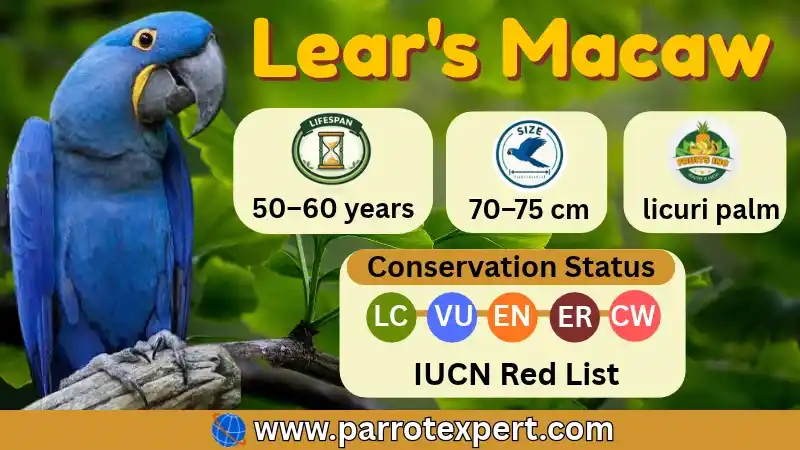
Lear’s macaw size makes this species a medium-large macaw. Adults are usually, between 70 and 75 centimetres long. Their wingspan can grow to about 90 to 100 centimetres. These adult birds typically weigh 900 grams.
Their bodies are covered in striking cobalt- indigo feathers. Their heads often appear slightly paler than their bodies. Additionally, bright yellow skin surrounds their lower eye area. Yellow face marks also show near the base of their beaks.
Their strong black or curved beaks help them crack nuts. Along with their long tails it can make an elegant look. By the way males and females Macaw overall look similar. Therefore experts sometimes use testing to identify them.
Natural Habitat and Distribution
The Lear Macaw naturally lives in northeastern Brazil. The Caatinga region, which is dry is the habitat, for this species. The Caatinga landscape has cliffs, shrubs and native vegetation. The birds particularly depend on licuri palm trees.
Read More: Blue Throated Macaw: Habitat, Lifespan, Diet, Care, & Facts
These palms provide important food throughout their natural range. We have seen Lear Macaws often visit palm groves to find food. Lear Macaws also use sandstone cliffs to nest and to find shelter. Consequently healthy palm habitats support Lear Macaws survival.
The species mainly occurs around Bahia state in Brazil. Important populations inhabit areas near Canudos and surrounding regions. These locations provide suitable feeding and nesting environments. However, habitat protection remains essential for their future.
Lear’s Macaw Diet and Feeding Habits
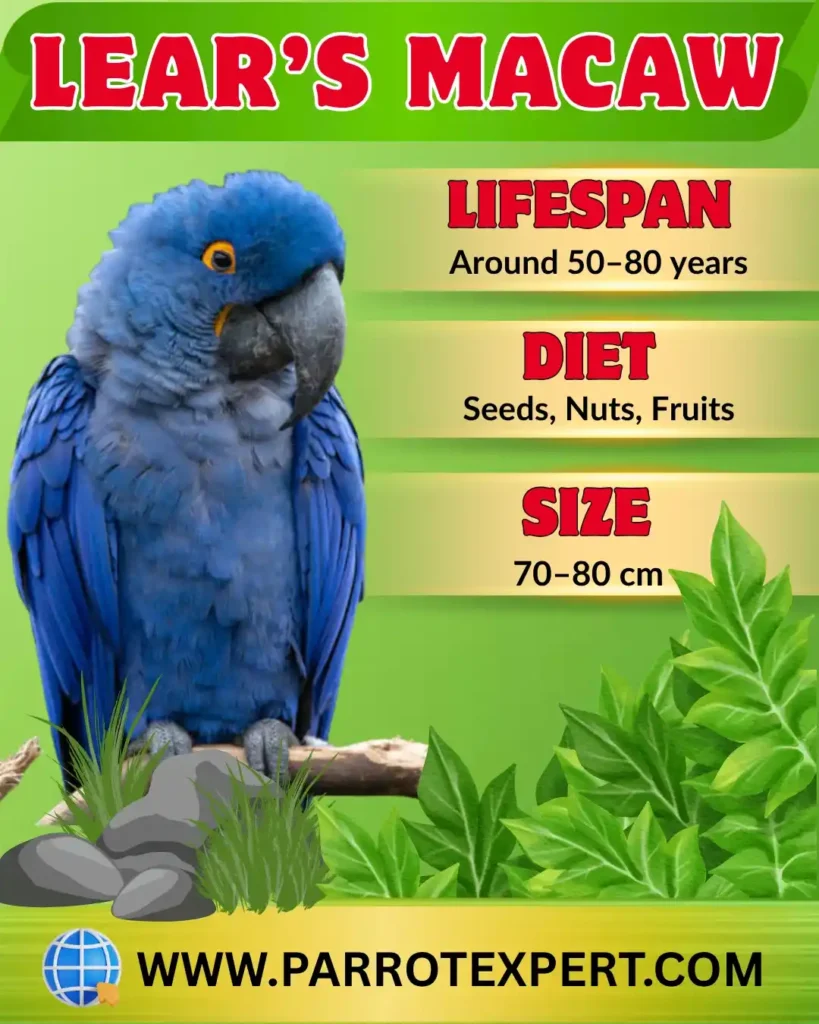
In Lear’s macaw diet it mainly consists of licuri palm nuts. These nuts provide important energy for daily activities. Their strong beaks crack the extremely hard outer shells. Afterward, birds consume the nutritious kernels inside.
They may also consume other native palm fruits. However, licuri nuts remain their most important food. Their feeding habits closely connect with local vegetation. Therefore, protecting licuri palms supports their natural survival.
Lear Macaws usually search for food during daylight hours. They often travel together between feeding and resting locations. Their social behaviour helps them locate suitable food sources. Additionally, group feeding supports communication among individual birds.
Lear’s Macaw Conservation Status
Lear’s macaw conservation status highlights its continuing protection needs. IUCN currently classifies this species, as Endangered. Endangered classification means this species faces a risk of extinction. I am encouraged that conservation efforts have helped this species recover its population.
Read More: Great Green Macaw: Lifespan, Size, Diet, Care, and Facts
Earlier, illegal trapping threatened wild Lear Macaw populations. Habitat destruction also reduced feeding locations. Furthermore livestock grazing sometimes affected palm regeneration. These pressures created challenges, for survival.
Today conservation organisation groups protect important nesting and feeding habitats. They also monitor populations. Discourage the wildlife trade. Community education helps support long-term conservation programs. These combined efforts help protect the species.
Is Lear’s Macaw Endangered?
Yes, the Lear’s Macaw is considered as an endangered parrot species. Its restricted natural range increases vulnerability to threats. Habitat damage can affect feeding and nesting areas. Illegal capture also creates risks, for populations.
I am glad that conservation programmes have helped make protection and monitoring better. Restoring habitats helps native plants recover. Taking care while traveling can also help people learn about conservation. We still need to keep protecting for generations.
Major Threats Facing Lear Macaws
Several environmental and human activities threaten this species. Understanding these threats helps us see why we set conservation priorities.
1. Habitat Loss
Expending agricultural can take away natural feeding areas. Construction and land clearing also harm plants. Consequently, birds may struggle to find sufficient food.
2. Illegal Wildlife Trade
Rare parrots sometimes attract illegal wildlife collectors. Capturing wild birds reduces natural breeding populations. Wildlife laws and monitoring help stop this behavior from happening.
3. Food Shortages
Lear Macaws depend heavily on licuri palm nuts. Changes in palm availability can affect feeding success. Therefore, protecting native palms remains extremely important.
4. Environmental Changes
Climate patterns have an effect on the availability of food and the conditions of habitats. When there is a period of no rain it can cause more difficulties, for survival. Conservation planning must consider these changing environmental pressures.
Lear’s Macaw Heartopia: What Does It Mean?
The keyword lear’s macaw heartopia relates to gaming searches. Heartopia is a cosy life-simulation game experience. Players may search for bird-related characters and information. However, the real Lear Macaws are belongs to the Brazilian wild parrots.
Read More: Military Macaw: Lifespan, Size, Diet, Care, Price, & Facts
The phrase heartopialear’s macaw may reflect interest in finding this species. I think Game content and real wildlife information have purposes. So we recommend players look at the game guides, for details. Real-world conservation facts need wildlife sources.
Breeding and Reproduction
Lear Macaws generally form long-term breeding pairs. They usually nest inside cavitieswithin sandstone cliffs. These protected locations help shelter eggs andyoung chicks. Breeding activity usually follows environmental conditions.
Females usually lay one or two eggs, per clutch. Incubation takes approximately four weeks in many macaws. Both parents contribute to raising their young chicks. Parents provide food and protection during early development.
Young birds remain dependent on their parents initially. They gradually develop flying and independent feeding abilities. Successful breeding helps maintain wild population numbers. Therefore, protecting nesting cliffs remains a conservation priority.
FAQs (Frequently Asked Questions)
Final Remarks
The Lear Macaw remains one of Brazil’s remarkable parrots. Its beautiful blue feathers create an appearance. Moreover its dependence on licuri palms makes habitat protection essential. Conservation efforts have helped improve population conditions and the threats remain.
Read More: Blue and Yellow Macaw: Lifespan, Diet, Care, Price, & Facts
Protecting habitats with following wildlife guidelines are going to support good recovery. Therefore continued conservation work can protect generations. Learning about this species encourages respect, for wildlife.
If this article is valuable for you, then please share it along with your friends, family members, pet lovers or relatives over social media platforms like as Facebook, Instagram, LinkedIn, Twitter, and more.
Do you have any experience, tips, tricks, or query regarding on this? You can drop a comment!
Have a Nice Day!