As we explain the Black capped conure is also known as Pyrrhura rupicola. These is a small parrot species that found in the western Amazon Basin of South America. It is famous by its dark brown to black head and the rounded, pearl like pattern on its chest feathers. These birds are famous in bird lovers and bird breeders.
These parrots is a part of the Pyrrhura conure group. These birds have loving and playful nature and ability to form strong bonds with its owners. It is making a good friend’s bird.
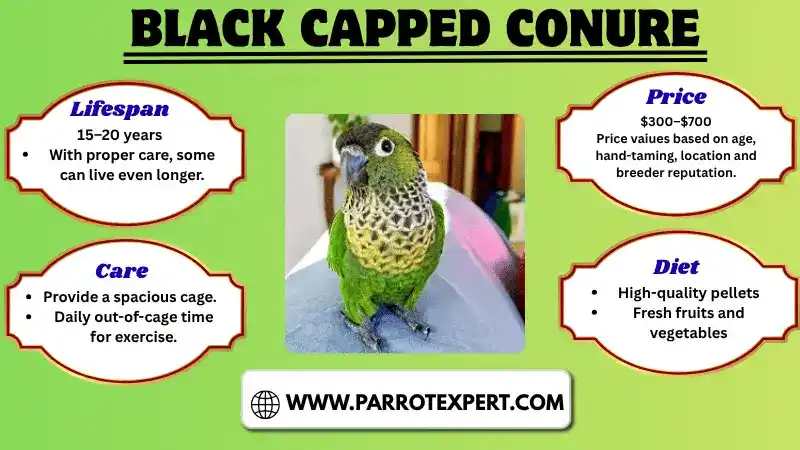
About Black Capped Conure
| Size | 10 inches |
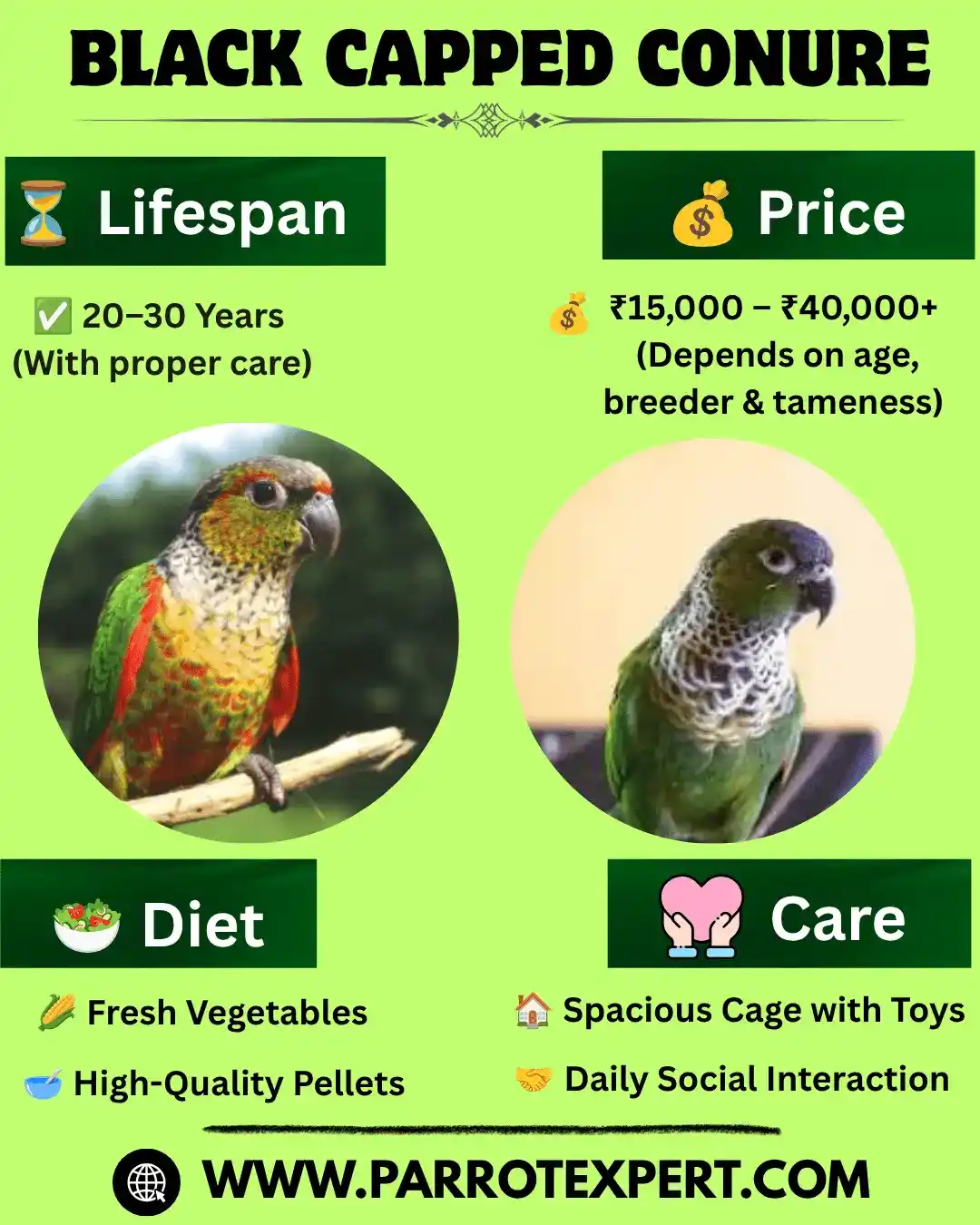
| Lifespan | up to 30 years |
| Bird Species | Conure |
| Colors | Green; black details |
| Sounds | Quiet, Natural calls |
| Interaction | Social, Smart, Energetic, Affectionate, Fun, Friendly, Docile |
| Comparable Breeds | Mitred Conure, Green Cheeked Conure |
Black Capped Conure Origin & History
These birds are also known as the black capped parakeet or rock conure. It is a special type of parrot local to south America. These parrots are reach in Bolivia, Peru, and Brazil. It is living in the dense and humid Amazon forests. In the wild these birds are found from the Amazon Basin to the Andes; where they can live and fly at heights reaching 6,000 feet.
Also Read: Jenday Conure Parrot and its Lifespan, Diet, Care, Price, & Facts
These birds are driving black capped conures to higher elevations and habitat loss. It has placed the species in the near threatened category.
Conure Black Capped-Personality & Behavior
In simple word these birds are good playful friend and full of high energy. These birds are getting well-known for making strong bonds with their family. It is displaying a shy gentle behavior when visitors are present in the home.
These parrots are famous because of their funny like personality. They love to play, learn tricks and move around in a fun silly way. Their friendly nature is why many families fall in love with the Black capped Conure and you might too!
Black Capped Conure Care & Feeding
Now we start a balanced diet of these parrots. Let’s start with a seed mix made for conures. It usually adds millet, oats, nuts and sunflower seeds and helps give important nutrients.
These birds’ diets add fresh fruits and vegetables daily for vitamins. You can give cooked foods like rice or chicken breast for extra protein. A cuttlebone is also helpful in their cage because conures like to chew.
Black Capped Conure Health Problems
It is knowing conures mainly hardy parrots and many owners report few or no major health concerns. These birds black capped conures like others in the group. It may start feather picking when they are restless or not given enough attention.
Also Read: Green Cheeked Conure Turquoise and its Lifespan, Diet, Care, Size, & Facts
It is occasionally conures may develop illnesses that are also seen in other parrot species. These add proventricular dilatation disease a viral condition in birds, psittacine beak and feather disease, psittacosis bacterial infection, beak bad bite or overgrowth and a fungal infection.
Natural Habitat and Distribution
Let’s explain these birds lives in a variety of habitats that support its feeding and nesting needs. It is knowing the natural Living place of any conure is first step in recreating good conditions in captivity.
These Black capped Conure like many birds kept in bird houses. It has adapted over millennia to specific climates, plant life and diets. It is giving captive conditions that closely resemble these natural factors helps ensure better health, activity levels and breeding success.
These parrots choose habitats that give a mix of open areas for feeding and dense cover for nesting and resting which should be carefully recreating in aviary conditions.
Black Capped Conure Vs Green Cheek
These kinds of birds are little larger with a different black head, gray chest and green body. It is giving simpler look.
Also Read: Golden Conure and its Lifespan, Diet & Care, Price, and Interesting Facts
As we know the green cheek conure is a bright green features, gray chest, maroon tail and colorful variations such as pineapple and turquoise.
These both parrots are smart, playful and attractive pets. Green cheek conures are mainly more common, quieter and come in a variety of colors.
Black Capped Conure Male Vs Female
These parrots show little visible difference between males and females. which makes sexing by looks challenging. These both birds have a black head, green plumage, a gray chest and a maroon tail with comparable size and coloration.
Males are sometimes more vocal and may engage in courtship behaviors like head bobbing and wing spreading. whereas females may become territorial and seek nesting areas during breeding periods.
These behaviors alone cannot reliably determine gender. The most correct way to sex a Black capped Conure is through DNA analysis or surgical sexing by a veterinarian with DNA testing selected due to its safety and reliability.
Is the Black-capped Conure Right for You?
These birds are good choice for the serious bird breeder. Who is interested to invest time and care and giving the right environment. It is not considered an ideal beginner species. It can thrive and bring years of enjoyment when properly cared for parrots.
Also Read: Green Cheeked Conure Pineapple and its Lifespan, Diet, Care, Price, & Facts
The Black capped Conure is a best choice for anyone who values observing natural behaviors, working toward successful breeding and creating a diverse, visually appealing aviary.
Black Capped Conure Price & Sale
As we know the price of these parrots mainly between $300 and $700 changed by variables such as age, level of friendliness, breeder quality and location. In India where the species is rarely available, legal market prices may range from ₹25,000 to ₹60,000 or more.
FAQs (Frequently Asked Questions)
Final Thoughts
In final these parrots is a beautiful and interesting bird that rewards caring owners with its personality and behavior. you keep one pair or many birds, your effort and knowledge will show in their health and happiness.
Also Read: Sun Conure Lifespan Insights and its Captivity to the Wild
If you have any questions about keeping or breeding these parrots, please leave a comment below or follow us on Instagram @johnnysfinches for daily updates and care tips.
If this article is valuable for you, then please share it along with your friends, family members, pet lovers or relatives over social media platforms like as Facebook, Instagram, Linked In, Twitter, and more.
Do you have any experience, tips, tricks, or query regarding on this? You can drop a comment!
Have a Nice Day!