The Pearly Conure is a bird with nice natural colours. This conure draws in bird lovers because of its look. Also its fun attitude makes it a nice pet to have. Many people like its smartness, energy and loving side.
Pearly Conures need the right care, attention and time with people. Knowing how they act helps people take care of them every day.
So learning about their food and where they live is still important. This guide talks about Pearly Conure features, attitude, food and care.
Pearly Conure Overview
| Size | 9 inches |
| Lifespan | 20-30 years |
| Bird Species | Conure |
| Colours | Green with details |
| Sounds | Quiet natural sounds, a bit noisy talks a lot can repeat sounds |
| Interaction | Friendly, full of energy likes to play, smart, fun, curious |
| Comparable Breeds | Sun Conure, Jenday Conure |
Pearly Conure Appearance
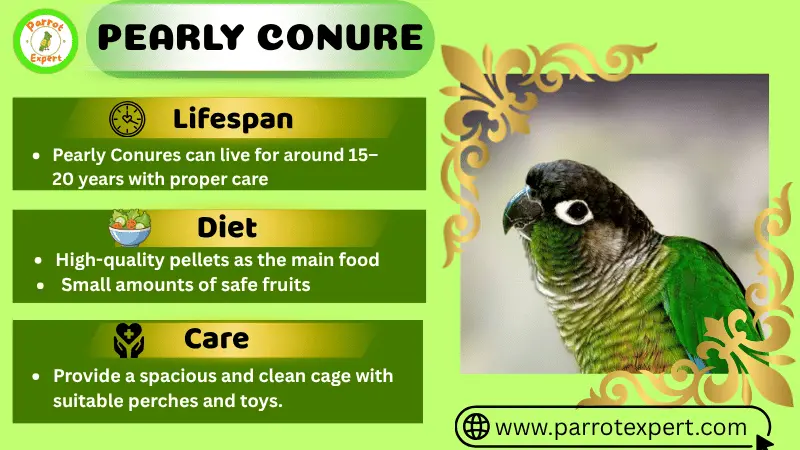
Pearly Conures often get attention because of their special feather looks.Their feathers can have green, yellow orange and red colours.
Also Read: Mitred Conure: Lifespan, Diet, Size, Care, Price & Facts
The exact colours depend on the type of bird and the way it was born. Also each bird can have looks. Their feathers often look like they have layers or a shiny look. This look makes them very popular with people who like conures. Their bright eyes also add to their look.
Young birds might get more colourful after they lose their feathers. So their look when they are grown up can be different from when they were young.
Personality & Behaviour
The Pearly Conure might be a type in its group, but it is still very popular. Because of their attitude love for tricks and being nice; they are a beloved pet.
In fact there are many of these birds that have become famous on social media. They are very loving; and will want to snuggle up after playing.
Lifespan
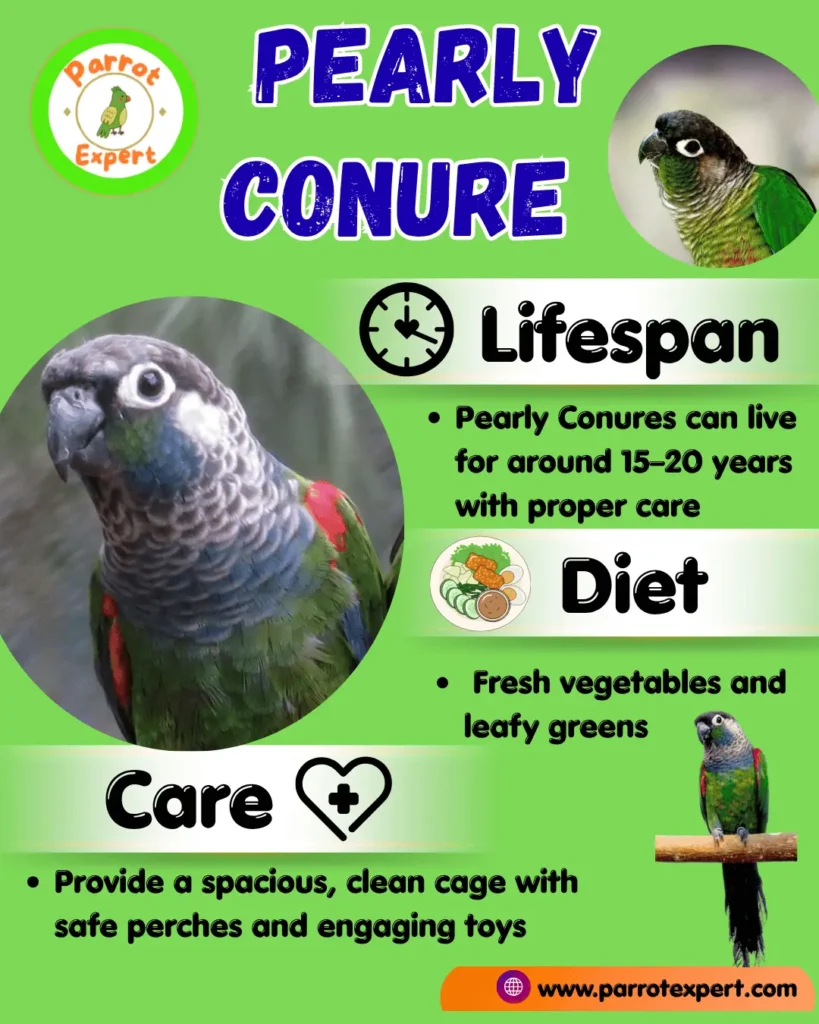
In a home the Pearly Conure can Survive up to 20 to 30 years. One thing that can make a pet bird die is when the owner does not know what to feed it. The food is very important when it comes to taking care of a bird.
Also Read: Dusky Headed Conure: lifespan, Diet, Care, Price/ Sale, & Facts
Do not feed it sunflower seeds because they have much fat. That can make it get a liver. Tumours can also happen if you feed it much or only certain things.
Care and Feeding
In the wild these conures do well with a variety of food. It usually has the basics – fruits, bugs, seeds and grains. For a first food pick a store-bought seed mix for conures or parakeets.
That is best for your bird because it has all the things that seeds have like corn, rye, oats and millet. Bathing your bird should be a part of your week. It makes your bird happy helps build a bond with you and keeps it clean. This three-part benefit makes bathing a must.
Pearly Conure Cage Requirements
Pearly Conures need space in their cage to move around and play. A bigger cage usually makes them more comfortable. Gives them more things to do. The cage should let them stretch their wings and climb. Use perches that have different shapes and the right thickness.
Also Read: Black Capped Conure: Lifespan, Size, Care, Diet, Price, & Facts
Different types of perches can help their feet and legs be healthier. Avoid unsafe materials that can hurt their feet. Put toys in the cage to keep them busy. Toys they can chew on can help them explore.
Also toys that let them find food can help them think and stay busy. Clean the food bowls, water containers and the cage regularly. Good cleaning helps keep the place cleaner and healthier.
Pearly Conure Exercise Needs
Conures are always moving and need physical activity. So owners should let them have time outside the cage when possible. A safe room can give them chances to explore safely. Take away things before letting the bird out.
Fans, open windows, wires and poisonous plants can be dangerous. Always watch the bird when it is flying or playing. Climbing, flying and playing help them stay healthy. Daily activity can also help them think better.
Pearly Conure Training
Training can help Pearly Conures feel more confident and learn actions. Start with things and reward them when they do something right.
Use repeating instead of being mean or scary.For example you can teach them to step up.
Also Read: Maroon Bellied Conures: Lifespan, Diet, Care, Size, & Facts
You can also teach them to come when they are out. Positive rewards usually make training better. Keep training session’s fun and the same every day. End them when the bird is still happy.
Pearly Conure Socialization
Socializing conures helps them feel comfortable with different people. Introduce things slowly while keeping a safe place. Avoid making them feel too stressed or scared with changes. Regular touching can help them feel better around people.
Being patient is still important at every stage. Family members should talk to the bird in a respectful way. This helps build trust and makes the bird less scared.
Common Pearly Conure Care Mistakes
Many new people make mistakes when learning how to care for conures. One mistake is not giving time for the bird to think and play. Another mistake is feeding many bad snacks.
Some people also get cages that’re too small for the bird to move around. Also not cleaning regularly can make the place unhealthy. Owners should give food, exercise, activities and moment with people. Regular visits to the Veterinarian can also help check the bird’s wellness.
Is the Pearly Conure Right for You?
The Pearly Conure is a choice for someone who is ready to spend time and care to give the right place. It is not necessarily a bird for people but with the right learning and effort it can live well and bring happiness.
Also Read: Green Cheeked Conure Turquoise: Lifespan, Diet, Care, Size, & Facts
If you like watching actions working to have successful babies and building a collection of nice birds. The Pearly Conure is a good choice.
Frequently Asked Questions About Conure
Final Thoughts
The Pearly Conure is a bird that gives award to people who take care of them. It has looks, a good attitude and interesting actions.
Whether you have one pair or a whole collection the time and effort you put in will be seen in how healthy and happy your birds are.
If this article is valuable for you, then please share it along with your friends, family members, pet lovers or relatives over social media platforms like as Facebook, Instagram, Linked In, Twitter, and more.
Do you have any experience, tips, tricks, or query regarding on this? You can drop a comment!
Have a Nice Day!