Are you interested and looking for a feathered pet friend to bring joy and happiness in your home? Don’t look for anyone else other than charming this Mexican Parrotlet! The Mexican Parrotlet due to its vibrant personality and stunning appearance has become very popular as a pet.
This guide will explain the commonly asked question about Maxican Parrotlets like the characteristics, care and training.
People also curious to know why they make such a compatible companions.
About Mexican Parrotlet
| Size | 5 inches |
| Lifespan | 20+ years |
| Bird Species | Parrotlet |
| Colors | Green |
| Sounds | Quiet, Natural calls, Chirping |
| Interaction | Social, Cuddly, Energetic, Affectionate, Silly, Playful |
| Comparable Breeds | Sun Conure, Celestial Parrotlet |
Mexican Parrotlet Origins & Natural Habitat
We can guess by their name that the Mexican Parrotlet basically comes from the Central America. Maximum you will find them along the Pacific lowlands of western Mexico. They also spread into parts of Guatemala and El Salvador.
Also Read: Celestial Parrotlet and its Lifespan, Size, Color, Diet, & Facts
They always forage in small flocks for seeds, fruits and insects. They do prefer hang out in dry scrublands, deciduous forests and even around towns and cities in their native habitat.
So, they have the ability and resilience to thrive in various environments naturally. This bird has become fascinating bird pets with this trait.
Habitat and Geographical Range
IAs documented that they are generally non-migratory but they will wander following food sources. The Mexican Parrotlet is mostly seen in riparian woods and sem ideciduous to deciduous forest, riparian woodlands, plantations and secondary forests at elevations up to 1,400 m (4,600 feet).
It is very difficult to see them due to their small in size and easily mixed up well with tree leaves. But they make reveal their presence by screeching and twittering calls. They are usually in seeing in the pairs or flocks. These parrotlets are fast in flight easily in tight formation.
There is very little documented about the Mexican Parrotlet and poorly studied about their biology and behavioral patterns. They usually eat the fruits of Ficus, berries and grass seeds foraged from the ground.
Mexican Parrotlet Personality & Behavior
Their attractive personality makes these parrotlets so loveable and popular. They are very easy to keep as a pet with you. They do silly tricks, a goofy demeanor and energetic behavior. Their cuddly side is also another one of their strongest aspect.
Also Read: Spectacled Parrotlet and its Facts, Diet, Care, and Habitat
These parrotlets are very affectionate and may cuddle up close to you to get scratching or warmth. The Mexican parrotlet develop the bonds easily. So they choose their favorite person in the family in no time.
It is good to know for you that your small feathered friend will stay with you for a long time. With a proper care they have a moderate lifespan of 20 years or more.
Mexican Parrotlet Speech & Sounds
There is another great thing about parrotlets is the level of their noise. They are not as loud as Cockatoos. They express their joy with subtle and natural sounding calls, consisting of chirps, tweets and an occasional piercing beep.
So, they are a good choice for apartment pets is also another trait of them. You can expect some vocalizations between them. If you want to keep a pair or more they slightly become noisier. You have to remember that these birds are very social.
Mexican Parrotlet Colors
These small birds display exotic colors or a plenty of details very rare. You can this trait on the Mexican parrotlets because they are entirely green.
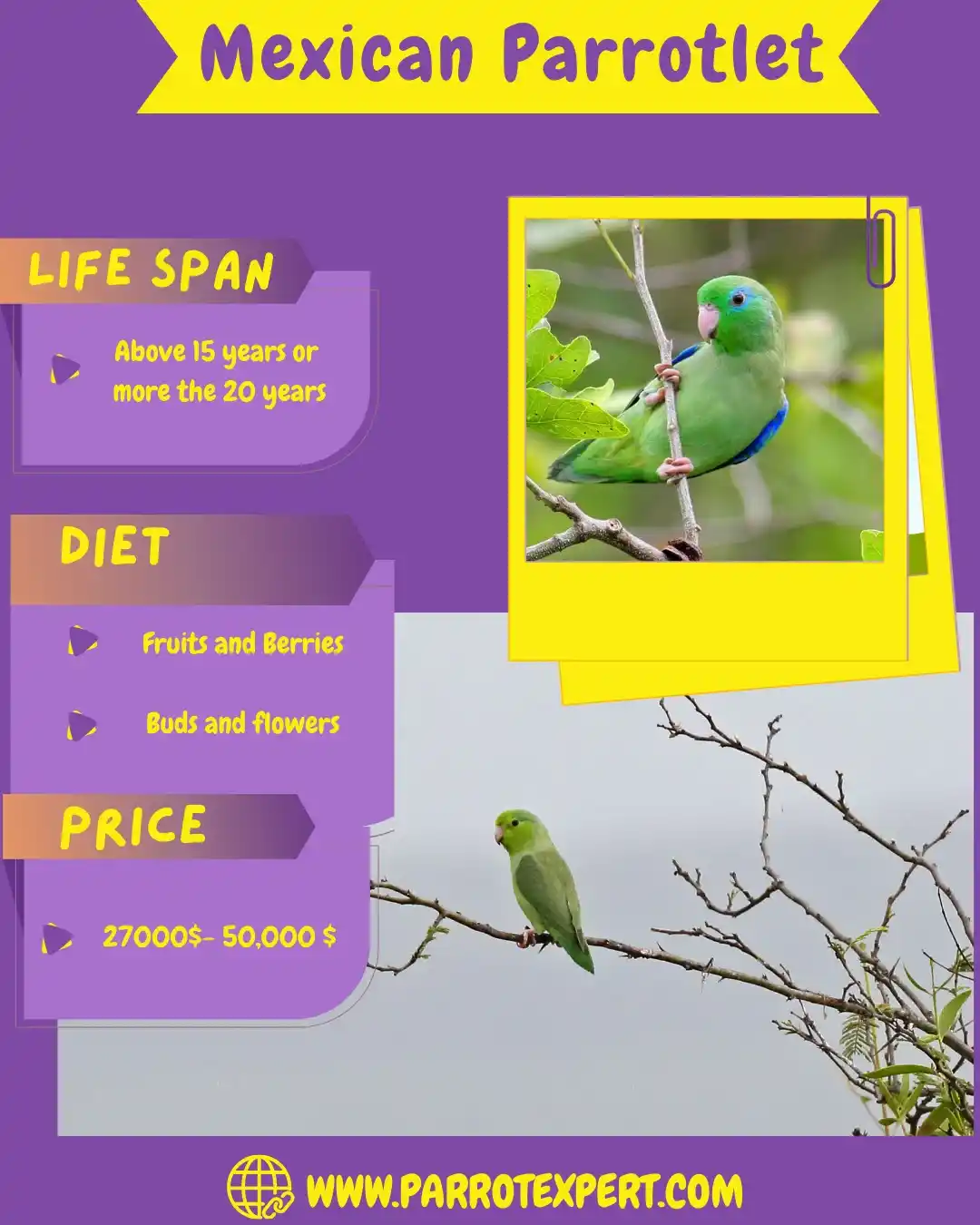
They have light green color that is little darker on the back and wings. Their face and the belly are slightly lighter. Some feathers are turquoise colored on the rump and wing tips.
As you can say that this coloration is very simple but still it suits these parrotlets best. It works well with their looks as it is accentuates their tiny frame. There are a lot of details on this little bird that would be overwhelming.
These little birds with an entirely green plumage are simple in their coloration same like most of other parrotlets.
Mexican Parrotlet Feeding Habits
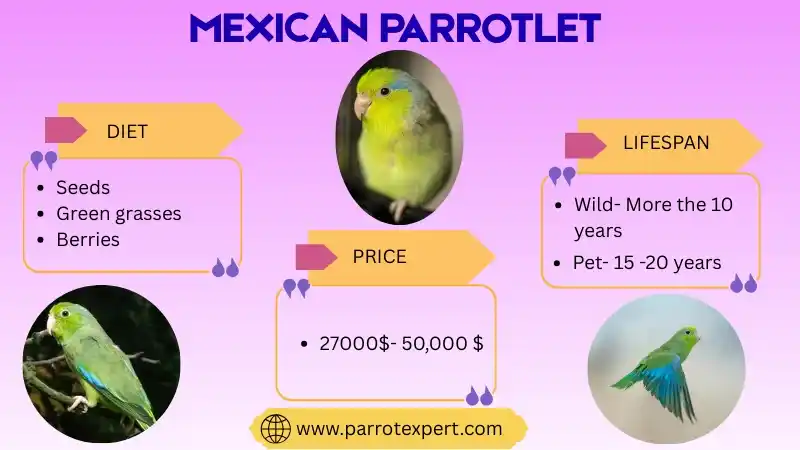
Diet: They usually eat the grass and weed seeds. Sometimes they eat buds and flowers, small fruits and berries. They occasionally also eat leaf buds and nectar. They visit in groups from croplands to glean spilled grain or forage in weedy field margins.
Also Read: Pacific Parrotlet and its Lifespan, Size, Color, Diet, Price, & Facts
So, they descend to shrubs and grasses; but foraging is typically careful and methodical in the canopy and on outer branches.
Preferred Environment: They follow fields with abundant seed sources and exploit weedy patches, hedgerows. For this reason, they prefer the edges of thorn scrub and tropical dry forest along riparian trees.
Mexican Parrotlet Nesting & Breeding
The Mexican parrotlet’s breeding season spans is from April to August. The female mostly lays 3 to 6 white eggs and incubate them for 21 days. The young fledge lean how to forage around 4 weeks after hatching.
Mexican Parrotlet Mating Habits
The Maxican parrotlets mostly breed between may and july then they lay clutches of up to 3 small white eggs.
They are basically incubated for at least 19 days and chicks fledge weeks after hatching. Maxican parrotlets lifespan is above 20 years with proper care. Mexican parrotlets normally nest in the tree cavities, cacti and other similar structures.
Mexican Parrotlet Health Conditions
There are a lot of beginners of aviculture assume mistakenly that parrotlets are frail and have weak health. The truth is that they will live healthily and achieve their lifespan of 20 years or more if you show them enough good care and attention.
Also Read: Can Cockatiels Eat Oranges (Peels + Seeds)? Expert Insights
With the plenty of exercise and social interaction and the all important baths ensure optimal conditions in your home. So, a healthy, happy and growing pet parrot will be the result of your dedication.
A parrot’s health and lifespan depends on a good diet.
FAQs (Frequently Asked Questions)
How Big Are Mexican Parrotlets?
They have bright yellow-green bodies. Their beak and feet are light peach color and eyes are dark brown colored. Generally, they are about 13-14 cm (5.1-5.5 in) and their weigh 30-37 grams.
What Is A Mexican Parrotlet?
Scientifically they are known as the Mexican parrotlet because they are native to Mexico. These parrotlets are small and vibrant green species.
Are Mexican Parrotlets Good Pets?
Yes! It is right if they get proper social interaction, training and mental stimulation they can be affectionate and intelligent pets.
Where Are Mexican Parrotlets Found?
They usually inhabit dry forests, scrublands and semi-open woodlands. As they are native to western mexico but particularly along the Pacific coast from Sonora to Colima.
How Long Do They Live?
If you provide then an excellent care to these small parrotlets then they can live around 15-20 years in captivity. There wild lifespan data is less well documented.
How Can You Tell Males And Females Apart?
Male parrotlets have different blue markings on them.
- The rump (lower back)
- The wings
Females have very less blue coloration.
Last Words
Here is the conclusion that the Mexican Parrotlet is an enchanting addition to any home in the captivating. As you can see they bring endless joy and entertainment to their owners with their vibrant plumage. They have playful nature and ability to learn tricks.
Also Read: Can Conures Eat Grapes? Benefits, Risks, and Guidelines
If you want a Mexican Parrotlets they are considered highly recommended as a cherished companion. There is Critter Kingdom brand is known for its commitment to provide the valuable information on pets. As we discussed that you can create a loving and fulfilling relationship with your Mexican Parrotlet.
It will work like many years to come by incorporating these guidelines into your care routine. Don’t forget to provide them a many spaces and stimulating environment. A nutritious diet and daily training and socialization also are needed.
Do you have any experience, tips, tricks, or query regarding this issue? You can drop a comment Facebook, Instagram or just here!
Have a Nice Day!