Learn about South Australia’s endangered glossy black cockatoo like World Wildlife Day. Here’s all you need to know.
World Wildlife Day, celebrated on March 3, is the perfect opportunity to start to light the beautiful and varied wildlife in South Australia, including the state’s endangered glossy black cockatoo population.
The glossy was once widespread across the south eastern part of Australia. But, they are now only be spotted in two sections of the country from eastern-Queensland to Mallacoota in Victoria, as well as an isolated population on SA’s Kangaroo Island.
Glossy Black Cockatoo – Facts
| Scientific name | Calyptorhynchus lathami |
| Common name | Glossy Black Cockatoo |
| Native to | Australia (endemic species) |
| Size | About 46–50 cm in length |
| Weight | Approximately 400–500 grams |
| Color | Dark brownish-black with a glossy sheen |
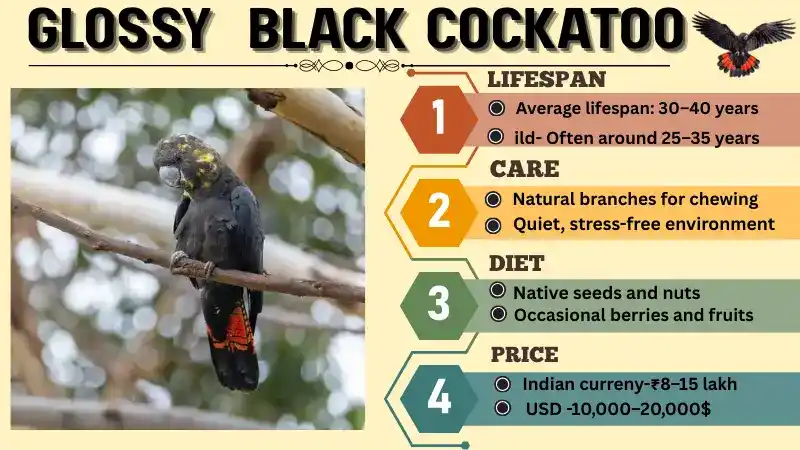
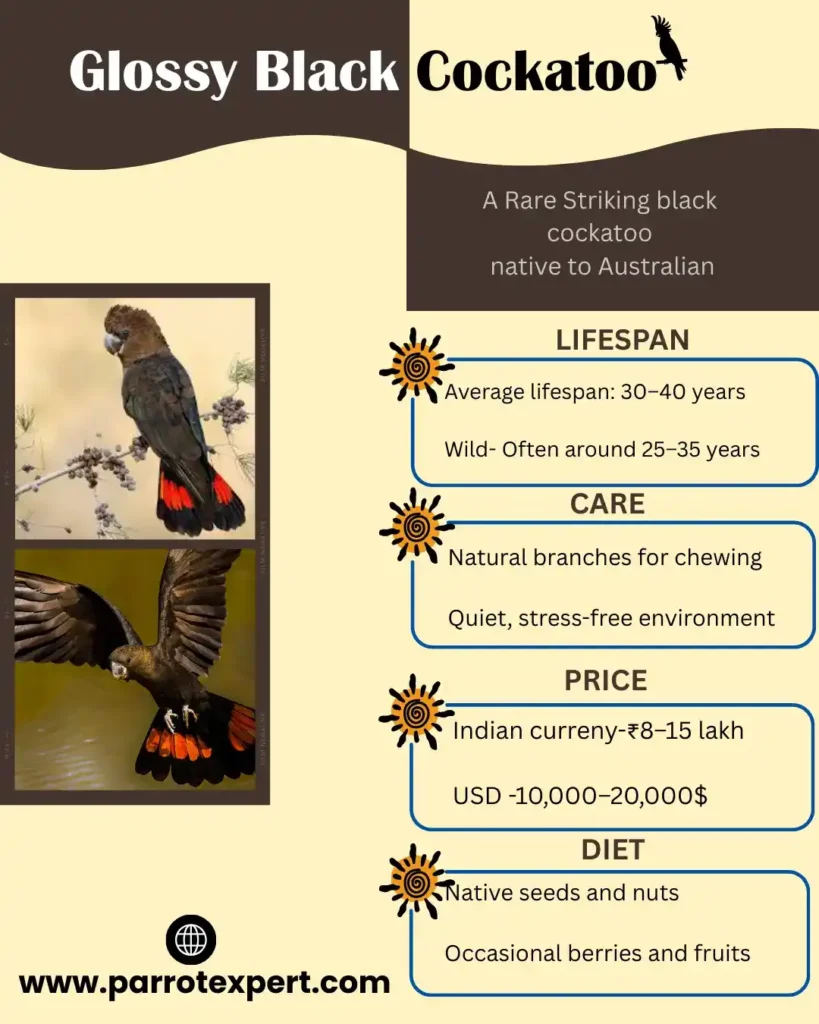
| Lifespan | They are live in around 30 years in the wild |
Glossy Black Cockatoo Identification
The Glossy Black Cockatoo is the little of Australia’s five species of black cockatoos (~48cm). It has a brown-black head, red or red with orange/yellow tail panels, and an otherwise dull black body.
Also Read: Galah Cockatoo and its Lifespan, Size, Diet, Price, & Facts
Adult females have uneven yellow patches on the head, and the tail panels tend to be redder with orange/yellow and black bars but may become less barred and redder with age. The tail panels on adult males tend to be solid red (no black barring). Young birds have yellow spots or streaks on their breast, with few yellow chunks and birds on the heads and body.
Glossy Black Cockatoo Behavior
Glossy Black Cockatoos are normally observing in the pairs or small groups of families. The Glossy Black Cockatoo exhibits strong site fidelity and follows a routine which is predictable, Also, Roaming and visiting the same trees on a daily basis. They have a Unique way of gripping cones with their feet and using their powerful beaks to pry out the nutritious seeds.
Apart from their name and striking looks, they are different and invisible birds. They many time perch quietly among foliage and last undetected unless seen in flight or heard feeding.
Glossy Black Cockatoo’s Diet
The species has one of the most specialized diets among all the cockatoos. They rely almost exclusively on the Cones, which they extract with great efficiency. hold them with one foot, and use strong beaks to strip away woody scales.
Also Read: Congo African Grey Parrot and its Lifespan, Size, Diet, Fact, & Price
Birds many time visit the same feeding trees repeatedly, Unlike more generalist cockatoos, the Glossy Black’s narrow dietary preference makes it particularly vulnerable to changes in the quality.
Water gets obtaining mostly from dew or rainwater trapped in leaves and bark. While they are travel few distance to feed, their daily range is limited by the availability of 10 to 20 Meters these she-oaks within their territory.
Glossy Black Cockatoo Breeding
Glossy Black Cockatoos are a slow and special breeding cycle. They rely on large, old tree hollows like living, many time reusing the same sites like many years. The female usually lays a single egg, which she incubates like a month while last in the hollow. In this time, the male provides the food.
After hatching, the chick stays in the nest like few months and continues to depend on its parents even after fledging. Because pairs breed never and rise only one chick at a time, people recover slowly with numbers reduce.
Where Do Glossy Black-Cockatoos Live?
Habitat
Woodland control by Allocasuarina and in open forests. Many time confined to remnant Allocasuarina patches surrounded by cleared farmlands.
Distribution
There are three allow section of the Glossy Black Cockatoo. The Glossy Black Cockatoo as it come on Kangaroo Island is recognized as subspecies Calyptorhynchus lathami halmaturinus and is a unsafe species.
Also Read: Timneh African Grey Parrot and its Lifespan, Size, Diet, Price, and Facts
The south eastern subspecies C. l. lathami found alike south-eastern Queensland to eastern Victoria is also a threatened species. A third subspecies found in the coastal areas of central-eastern Queensland is subspecies C. l. erebus.
What do Glossy Black-Cockatoos Eat?
Glossy Black Cockatoos are expert feeders, truing totally on seeds alike the cones of native she-oak trees. Their powerful beaks are adapted to crack open cones, leaving distinctive cone fragments called “chewings” or orts under feed trees.
They are highly choice, many time returning to preferred trees while ignoring others nearby. Because not all she-oaks bear cones, and not all she-oaks with cones are fed on by the birds, finding and save important add trees is risky to defense.
Conservation Status and Threats
The Glossy Black Cockatoo listed as unsafe in few Australian states, and few domestic populations are study at risk. The primary warning to the type are loss of home and fragmentation, particularly the clearing of she-oak woodlands like agriculture, urban development, and infrastructure. The loss of big hollow bearing trees further less breeding opportunities.
Also Read: Moluccan Cockatoo and its Lifespan, Size, Diet, & Personality
Bushfires pose another important warming, as intense fires to be destroy feeding habitat, nesting trees, and entire local populations. Climate change is expected to exacerbate these risks by increasing fire frequency and altering the issue of important food plants.
Predation and competition like nesting hollows alike introduced species, such as feral bees, also impact breeding success. Because the bird is so specialized, even small environmental changes are have important result.
Glossy Black Cockatoos Breeding
Glossy Black Cockatoos breeds very slow, living in big tree hollows. The female normally lays one egg in 1 to 2 years, which she hatch and male guide food. Chicks fledge after multiple months and last dependent on parents like an extended period.
Breeding success depends on the availability of:
Safe, undisturbed nesting hollows
Nearby feed trees
Access to fresh water
FAQs (Frequently Asked Questions)
Are Glossy Black Cockatoos Endangered?
Yes. Glossy black cockatoos are study risk or unsafe in parts of Australia. Their populations are threatened by habitat loss, less food sources like she-oaks, and slow breeding rates, build it protection efforts important like their survival.
How Loud Is A Glossy Black Cockatoo?
Glossy black cockatoos are quiet link with other cockatoos. Their calls are soft, whistle like soft sounds, usually heard during flight or feeding. They are noticeable nearby, but are rarely deafening or harsh, even in forested habitats during daylight.
Can It Talk Like Other Parrots?
No, Glossy black cockatoos are not mimic human talk. Creating a soft whistles and noisy calls.
What Does a Glossy Black Cockatoo Look Like?
Glossy Black Cockatoos are small, dark brown black type, and attractive red tail council; females show yellow facial spots. On the other side males have pale bills and dark eyes.
What Are Differences Between Glossy Black Cockatoos Male VS Female?
Male glossy black cockatoos have solid dark heads, dark brown eyes, and pale horn colored bills. Females have yellow spots on the head and neck, reddish eyes, and darker bills. Females also show orange yellow barring on the tail panels, On the other side males shows bright red tail panels.
Conclusion
The Glossy Black Cockatoo is a amazing example of special housing within Australia. Its quiet presence, glossy plumage, and dependence on she-oak woodlands make it both unique and vulnerable.
Also Read: Bare Eyed Cockatoo and its Lifespan, Diet, Behavior, & Price
As pressures on Clear and natural habitats continue to grow, the future of this species depends on help conservation action and public Knowledge. It is around saving the delicate balance of Australia’s woodland ecosystems like generations to come.
Do you have any experience, tips, tricks, or query regarding this issue? You can drop a comment Facebook, Instagram or just here!
Have a Nice Day!