The Cuban Macaw (Ara tricolor) was one time a bright and beautiful symbol of Cuba’s rich wildlife, easily respected by its bold colors and noticeable looks. Sadly, this amazing parrot no longer exists. Today, we know it only between old records and a few protect specimens. Its destruction serves as a strong prompt of why we must protect risk species before they disappear like good.
Colorful flash was the Cuban Macaw a brilliant bird that once brought life to the island’s wilderness. Sadly, this beautiful species is now lost. Its story is a touching hint of nature’s wonders and how human actions capable of both admire and endanger the very things we find amazing.
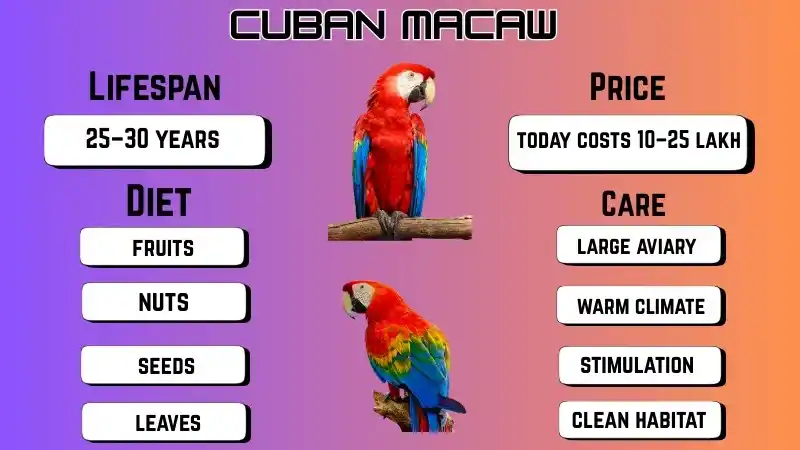
In this article, we’ll take a closer look at the Ara tricolor what made this bird so special, how it remove, and how its story continues to inspire modern conservation efforts.
Cuban Macaw – Overview
Also Read: Moluccan Cockatoo and its Lifespan, Size, Diet, & Personality
| Category | Fact |
| Scientific Name | Ara tricolor |
| Common Name | Cuban Macaw |
| Extinction Date | Around 1864 (late 19th century) |
| Status | Extinct |
| Length | 45–50 cm (smallest Caribbean macaw) |
| Family | Psittacidae (parrots) |
| Weight | About 250–300 grams |
| Range | Endemic to Cuba |
| Plumage Colors | Red/orange head & body, yellow wings, blue wing tips & tail |
Cuban Macaw Physical Characteristics
The Cuban Red Macaw stood out like its bright colors and unique size. It’s clear features build it unlike any other macaw species, providing it a special place in Cuba’s natural history.
Coloration
Cuban Red Macaws were known like their dazzling colors. Their bodies were mostly bright red, perfectly contrasted by vivid blue wings.
Also Read: Severe Macaw with its Lifespan, Size, Care & Diet, and Price
Few birds also had touches of yellow, especially around the head and wings, along with a individual red patch on the forehead that build them even more eye catching.
Their lively feathers weren’t just beautiful they also helped them communicate with their mates and other members of their flock.
Size and Morphology
The Cuban Red Macaw was smaller than compare macaw species, and adults normally around 43 to 48 centimeters (17 to 19 inches) in length.
Even between they were compact in size, they had strong bodies and powerful beaks perfect like cracking seeds and nuts. Their long, pointed tails also added a touch of elegance to their flight.
These physical marks build them well suited to their habitat, providing them the lightness to move easily between trees and point thick forest areas.
Cuban Macaw Diet
The diet of the Cuban Macaw played a important role in its survival and total health. As you know these parrots ate, how they find like food, and what nutrients they needed, we gain a clear picture of their place in the ecosystem and how they link with their environment. This knowledge also helps guide talk efforts like other risk species today.
Natural Food Sources
The Cuban Macaw builds on a wide difference of natural foods to stay healthy. In its domestic home, it provided on different types of fruits, seeds, nuts, and plant matter. One of the favorite foods was the fruit of the royal palm tree, which provide plenty of nutrition.
They also ate fruits alike other palm species, involve the Cuban royal palm and the thatch palm, building these trees an important part of their diet.
But fruits, the Cuban Macaw also ate the seeds of few trees, such as mahogany and Spanish cedar. These seeds gave the birds important nutrients, but their provide habits also helped the forest. By move and release seeds, the macaws played a important role in circulate and restore these tree species, creating them an important part of their ecosystem.
Foraging Behavior
The Cuban Macaw’s foraging habits were truly interesting. These birds were quick and agile, move are easily between the forest shades as they searched like food. Their strong beaks helped them break open strong shells to achieve the nutrients inside.
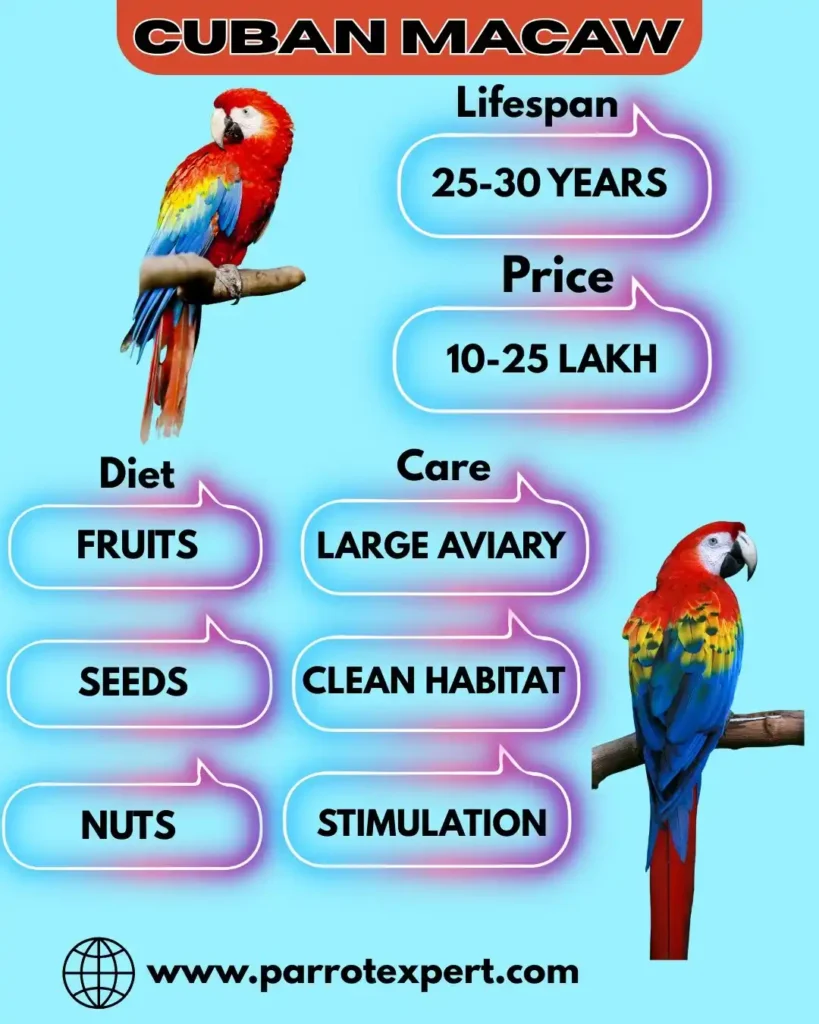
Sometimes, they even used simple tools like small twigs to help way in food that was harder to reach, showing just how smart they were.
The Cuban Macaw also work on social foraging, often forming small groups to look like food together. This teamwork helped them explore a wider area and increased their chances of finding plenty to eat.
By foraging as a group, they must warn each other around ripe fruits or hidden seeds, building their search like food more effectively.
Nutritional Needs
Like all living animal, the Cuban Macaw needed a balanced diet to stable healthy and fruit. Involve the good amounts of proteins, carbohydrates, fats, vitamins, and minerals to support general well start.
Also Read: Hyacinth Macaw and its Species, Size, Lifespan, Diet, and Facts
Fruits are essential portion of the Cuban Macaws daily’s diet; because they help to provide natural sugars, vitamins, and antioxidants. By eating them, these birds got a enlarge range of nutrients important like their health. The seeds they ate were also important, offering proteins and fats that offer them energy and supported muscle growth.
In addition to fruits and seeds, the Cuban Macaw ate leaves, flowers, and seasonal small bug. These extra foods helped boost their diet, providing important vitamins, minerals, and food fiber like general health.
Staying healthy was important like the Cuban Macaw’s survival, directly work on its ability to reproduce and thrive. A well nourished bird was more likely to boost strong offspring and have the energy and resilience to handle challenges in its environment.
Cuban Macaw Habitat and Distribution
The Cuban Macaw’s domestic habitat was as charm as the bird itself. These colorful parrots lived in Cubas lush forests, developing in the island unique ecosystem. Sadly, deforestation and habitat loss created their numbers to drop emotional. By the end, they only found in a few isolated areas, mainly the Zapata Swamp and the Sierra de Najasa regions.
Legacy and Importance
As you know the Cuban Macaw is lost, it still holds importance like science and conservation. Museum specimens and historical records provide important insights into Caribbean ecosystems before human activity create important changes. Its story also serves as a warning, showing how quickly a species capable of vanish when its habitat is destroyed.
Today, ecologist use the Cuban Macaw’s story to highlight the importance of protecting risk birds, particularly those found only on islands. Cuba is still home to few at risk species, such as the Cuban Amazon and the Cuban Parakeet.
Protect these birds means protect their natural home, controlling wildlife trade, and teach people around the value of biological.
FAQs (Frequently Asked Questions)
Is the Cuban Macaw Extinct?
Yes! Cuban Macaw declared we have lost the 1800 in late, and not confirmed especially since that time.
What is the Lifespan of Cuban Red Macaw?
Cuban Macaws as known like their long lifespan, with cage living up into around 60 years
Can Cuban Macaws be Kept as Pets?
Although their bright colors and beauty might build them seem appealing as pets, it is important to remember that Cuban Macaws are highly risk and protected by international law. Saving them as pets is illegal and harms efforts to save the type.
What did Cuban Macaw Look Like?
The Cuban Macaw had living in red, yellow, and blue feathers, a medium sized body, and a strong beak. Its bright colors and individual looks made it truly unique to Cuba.
Conclusion
In this article, we’ve explored the Cuban Macaw in detail. A reminder that once a species is gone, its beauty is capable of never be restored.
Also Read: Bare Eyed Cockatoo and its Lifespan, Diet, Behavior, & Price
The tale of the Ara tricolor urges us to protect the at risk species we still have ago they, too, become mere memories of the past.
Do you have any experience, tips, tricks, or query regarding this issue? You can drop a comment Facebook, Instagram or just here!
Have a Nice Day!