Here we will be discussing about pied cockatiel stands among the most attractive cockatiel colour mutations today. Its beautiful feathers create unique patterns across different parts of body. Many bird lovers choose pied cockatiels, but every bird looks different. So, these birds combine attractive colours with friendly and playful nature.
As we know pied pattern results from a genetic mutation affecting feather pigmentation. Unlike normal grey cockatiels, pied birds show irregular light markings. These markings can appear across their wings, chest, back, and tail. So, each pied cockatiel normally develops a bit different looks.
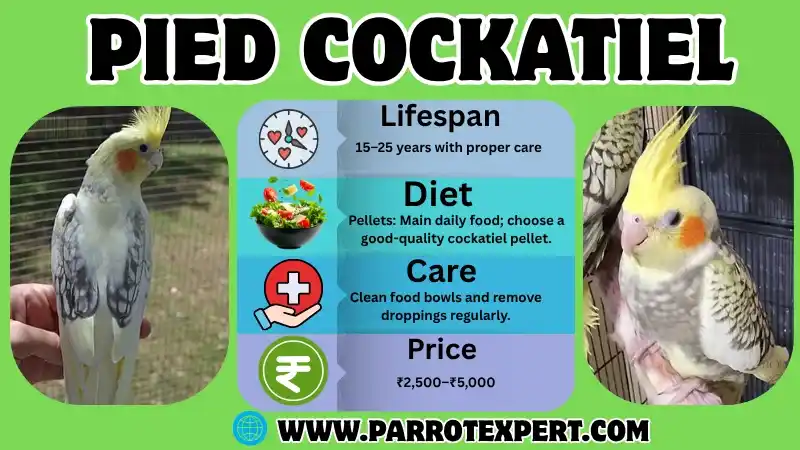
Pied cockatiels still belong to the types Nymphicus hollandicus. They share many actions and care must with other cockatiels.
Pied Cockatiel Facts
| Common Names | Pied Tiel, Variegated Cockatiel, Harlequin Cockatiel |
| Scientific Name | Nymphicus Hollandicus |
| Adult Size | 10–12 inches |
| Life Expectancy | 10–14 Years |
What is a Pied Cockatiel?
Let we talk about pied cockatiel is a cockatiel that has a mutation that results in random patches of white or yellow feathers on their body. These patches can be small or large and can come anywhere on the bird’s body.
Also Read: Albino Cockatiel and its Lifespan, Diet, Care, Health, Price, & Facts
As we know about the pied cockatiels can come in a various type of colors, including grey, cinnamon, and lutino. The variation that roots pied cockatiels is a shy gene, which means that both parents must carry the gene for it to looks in their offspring.
Origin and History
Cockatiels can be found in Australia. Although they can be considered as the fastest flying birds on the island; they lack the wing strength necessary to reach Tasmania like other birds from Australia.
The pied variation is a mutation in a standard grey cockatiel. This is the first cockatiel variety and was created in San Diego, California. They were developed by Mr. D. Putman in 1951.
Today, they are one of the most popular and well-loved cockatiel varieties. After Putman’s passing, Mr. Hubbell continued the breeding program. Mrs. R. Kersh was also busy breeding another type of pied cockatiel.
Pied Cockatiel Colors & Markings
You can find these birds in every color you would find solid cockatiels. However, pieds can display a variety of colors in seemingly random patterns, such as splotches and blotches. Grey-colour pied cockatiels could be gray with white patches. A cinnamon pied, on the other hand, would have a variety of yellows or cinnamons.
Also Read: White Face Cockatiel and its Care, Diet, Lifespan, Price, & Facts
As we know Cockatiels that have a single spotted gene are more likely to have yellow or white feathers at a few locations like the toenail and wing feathers. Two of the pied genes can result in birds with larger and more varied color patches.
Pipit cockatiels are the most sought-after and have symmetrical patterns that match from one side to the other. It is extremely rare, however, as it is impossible to predict when breeding.
There are three types of pied cockatiels.
- Clear pied
- Heavy pied
- Light pied
Male and Female Pied Cockatiels
Determining sex can become difficult with certain cockatiel mutations. Visual markings work best with traditional grey cockatiels after maturity. Some color mutations make traditional visual sexing much harder. Therefore, owners should avoid relying solely upon feather coloration.
Male cockatiels many time whistle, sing, mimic sounds, and show joyfully. Females many time show quieter and more reserved behavioral patterns. However, behavior cannot guarantee a bird’s sex with complete accuracy. DNA testing provides a more reliable method for determining sex.
Cinnamon Pied Cockatiel
Now we talk about the Cinnamon Pied Cockatiel combines warm cinnamon feathers with pied markings beautifully. Its soft brown coloration creates a gentle, attractive looks. So, each bird develops unique feather patterns.
Also Read: Cinnamon Cockatiel and its Lifespan, Care, Diet, Size, Price & Facts
As we know cockatiels normally show friendly, playful nature with proper socialization. Its need a normal nutrition, airy housing, daily exercise, and daily interaction.
Pearl Pied Cockatiel
In this section, we talk about Pearl Pied Cockatiels that combine attractive pearl patterns with distinctive pied markings. Their feathers many time show beautiful spots, patches, and contrasting shades across the body.
So, each bird develops unique patterns as it matures. Its need normallyhas friendly, playful personalities and need normal nutrition, airy housing, exercise, and daily interaction.
White Faced Pied Cockatiel
In this section we have discussing White Faced Pied Cockatiels combine a clean white face with attractive pied feather patterns. Their bodies often display contrasting grey and white patches, creating a distinctive appearance.
So, each bird develops unique markings. It’s normally needs have friendly, playful character and need balanced nutrition, spacious housing, regular exercise, and daily interaction.
Lutino Pied Cockatiel
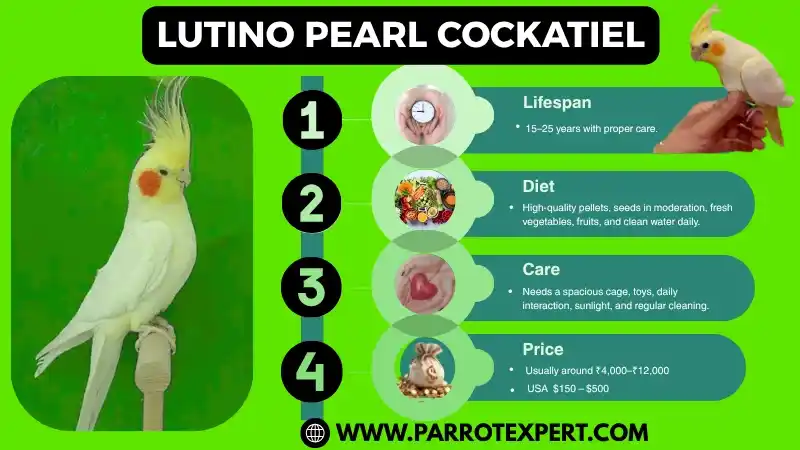
Let we start in this paragraph Lutino Pied Cockatiels combine bright yellow plumage with distinctive pied markings. Their feathers can display beautiful yellow, white, and subtle contrasting patches.
So, each bird develops a unique pattern. As we know normally need have friendly, playful personalities and need normal nutrition, airy housing, regular exercise, mental stimulation, and daily interaction.
Caring for a Pied Cockatiel
We discussing in these topics pied cockatiels are very hardy birds that are easy to care for. They have similar care must other cockatiels. But, there are a few things that you must be save in mind if you’re considering getting a pied tale.
Also Read: Silver Cockatiel and its Types, Price, Lifespan, Care, & Facts
One thing to save in mind is that pied cockatiels can be visually sexed by looking at their cheek patches. Male birds have bright orange cheek patches, while female birds have paler, less vibrant cheek patches.
This can be helpful if you’re looking to breed your pied cockatiel, as it can help you control the sex of your birds.
Lifespan and Longevity
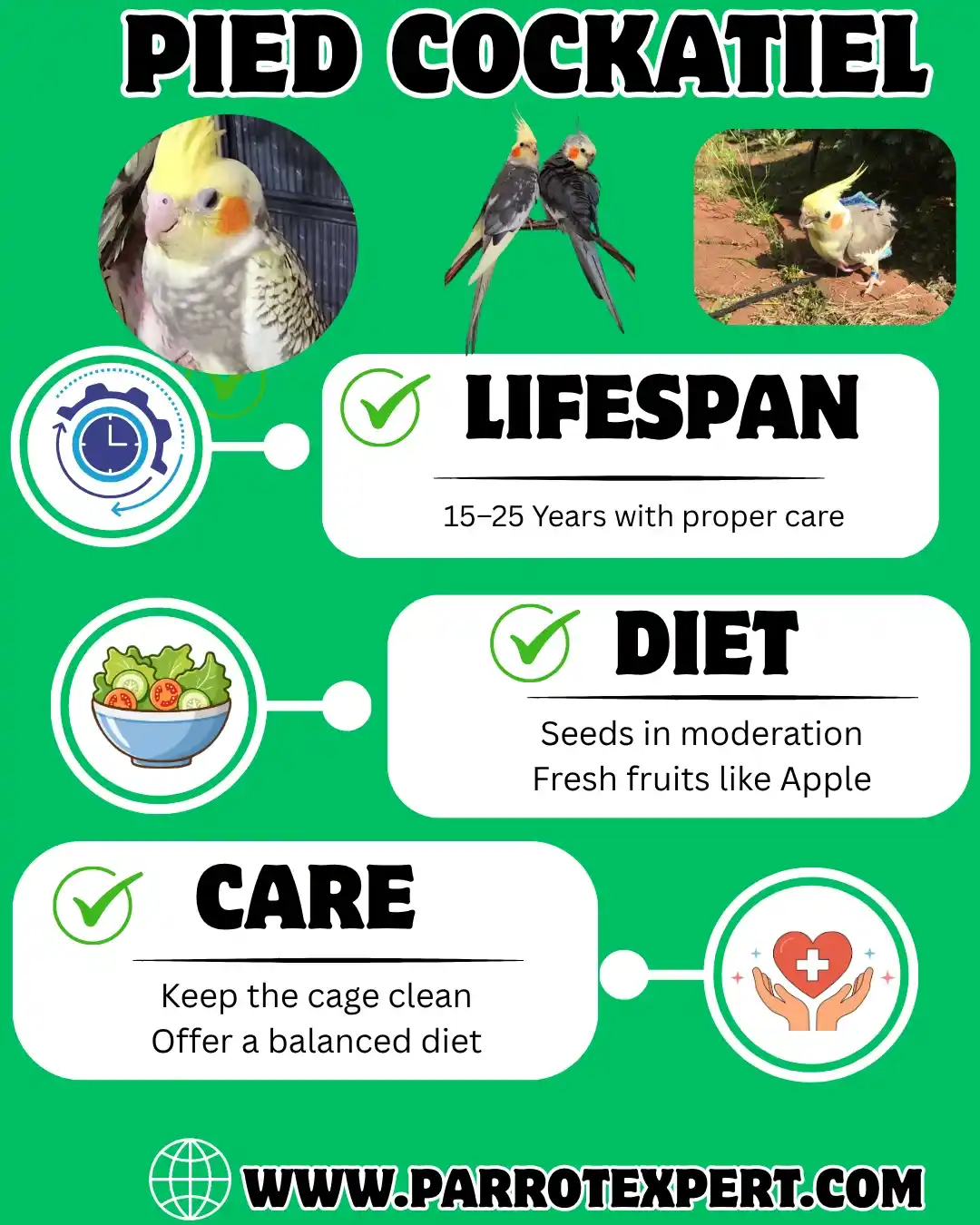
Now we start a one of the most important aspects to know about owning a Pied Cockatiel is their impressive lifespan. With proper care, a healthy cockatiel can live like 15 to 20 years, and few have even been known to reach 25 years or more.
This means your feathered partners will be with you for a real portion of your life, possibly even surviving few of your other pets.
Health Problems
Although pied cockatiels are mostly hardy birds with health complications few and far between, some of the ailments that do plague it are:
- Overgrown nails and beaks
- Feather picking
- Weight loss
- Feather cysts
- Heat stroke
- Watery eyes
- Psittacosis
- Coccidiosis
- Goiter
- Bacterial infections
- Diarrhea
- Rheumatism
- Egg binding
Breeding Pied Cockatiels
Here, we will reveal about breeding pied cockatiels can be a rewarding experience. But it’s important to know the genetics of pied cockatiels ago you start breeding them.
As mentioned earlier, the pied gene is a recessive gene, which means that both parents must carry the gene like it to looks in their offspring. If you’re breeding two pied cockatiels jointly, all their fruit will be pied cockatiels.
If you breed a pied cockatiel with a normal grey cockatiel, all their offspring will be split for pied. This means that they carry the pied gene, but don’t show the pied modelling herself.
FAQs (Frequently Asked Questions)
Final Thoughts
So at the finally, Pied Cockatiel is truly a marvel among partners birds a living testament to nature’s artistry and a beacon of joy for those fortunate enough to share their lives with them.
Also Read: Grey Cockatiel and its Lifespan, Care, Diet, Price, Types & Facts
As we know they’re visually stunning, unique colour spots, which range from subtle spot to bold patches, to their great loving and playful character, they offer a unique blend of beauty and partnership. Each Pied Cockatiel is a single, filled with character, ready to whistle a tune, mimic a sound, or simply offer a comforting existence on your shoulder.
If this article is valuable for you, then please share it along with your friends, family members, pet lovers or relatives over social media platforms like as Facebook, Instagram, Linked In, Twitter, and more.
Do you have any experience, tips, tricks, or query regarding on this? You can drop a comment!
Have a Nice Day!