As pet owners, small parrot like the Green Cheeked Conure can strongly capture the hearts of its owners These parrots are playful nature and intelligence control them to explore regular interaction. It making them perfect pets for attentive and caring owners.
In this article discusses the personality of the Green Cheek Conure. It along with practical advice on giving the care and affection they need.
So, it discusses ways to support your bird’swell-being and create a strong and happy bond for a healthy life together.
Green Cheek Conure – Overview
| Facts | Details |
| Scientific Name | Pyrrhura molinae |
| Size | 25-26 cm (10 in) long |
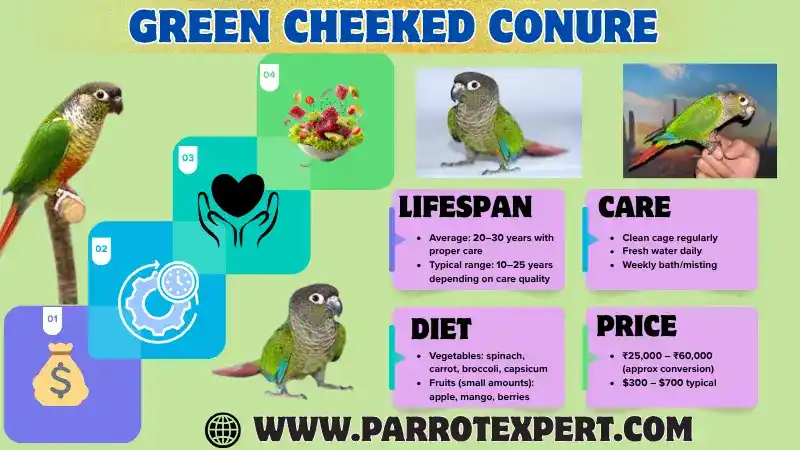
| Lifespan | 15-30 years; but in captivity |
| Origin | South America (Bolivia, Brazil, Argentina) |
| Noise Level | Low-moderate |
| Talking Ability | Some mimic words |
| Color Mutations | Turquoise, yellow-sided, cinnamon, pineapple |
| Diet | Pellets, veggies, fruits, seeds |
| Cage Size (Min) | 24x24x30″ bar spacing ½-⅝” |
| Personality | Playful, cuddly, intelligent flocker |
Green Cheek Conure Origin and History
Let us discuss the originating from South America, the green cheeked conure inhabits forests and wooded regions across Brazil, Bolivia, Argentina, and Paraguay.
They usually travel in small flocks of 10 to 20 birds. but may form larger groups where food is rich.
Green Cheek Conures’ Appearance and Vocalizations
It is known Green Cheek Conures are one of the lower parrot species. They may learn a small number of words.
Also Read: Can Conures Eat Pineapple? Pet Owner’s Guide
But, they are not excellent talkers and their deep voices can make their speech unclear.
Green Cheek Conures produce a diverse range of sounds. It owners often learn to recognize their meanings over time. Their Look is marked by short legs and a strong yet simplified body.
Green Cheek Conure Diet
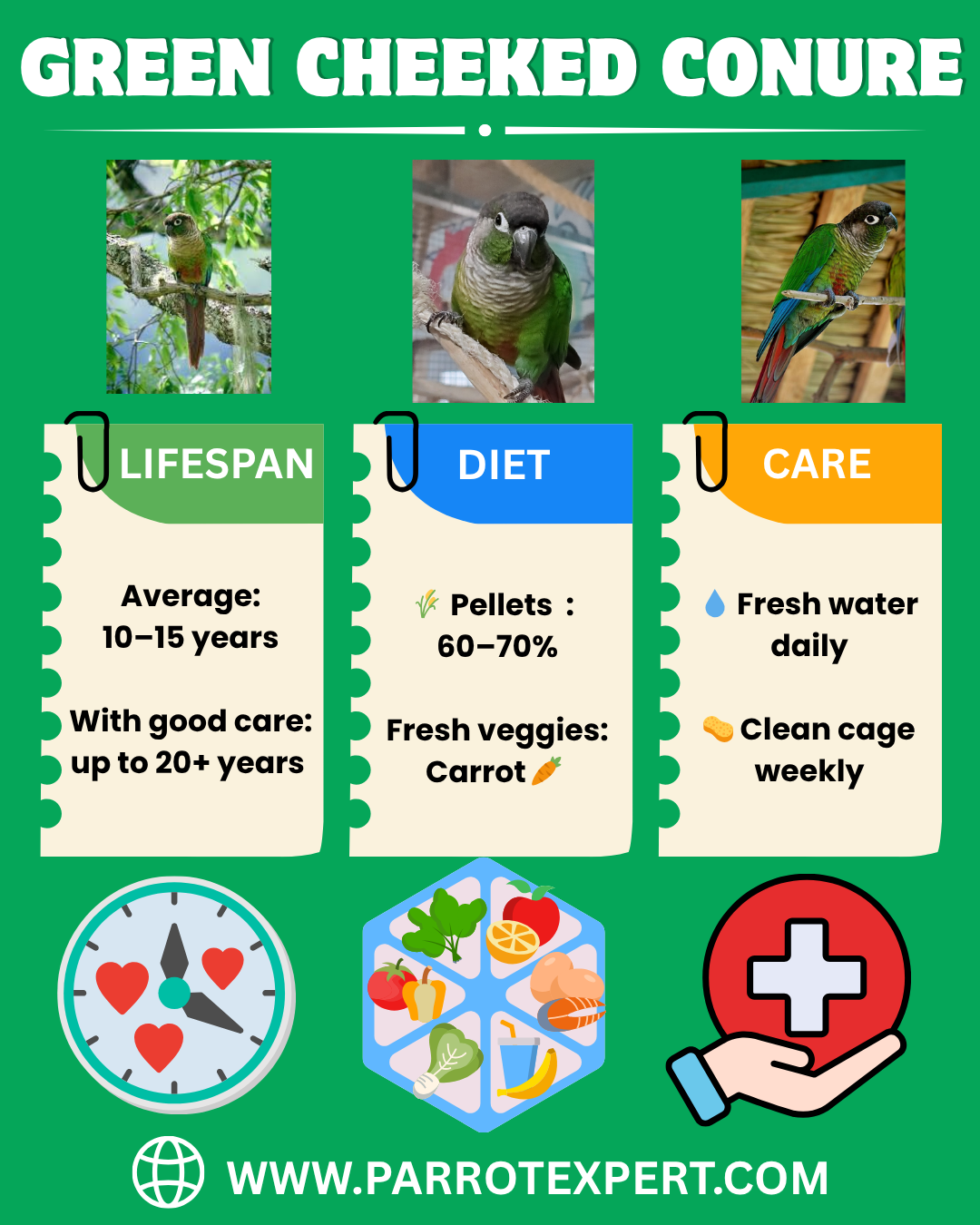
Let’s define the Green Cheek Conures readily eat a variety of foods. Their diet should be 60% seeds dry, soaked or sprouted and 40% fresh fruits, berries and vegetables.
It adds hawthorn berries, blackberries, willow catkins and young leaves of dandelion and smooth sowthistle. While cultivated options like cotoneaster berries, nasturtium flowers, pomegranate and soaked dried figs are also suitable.
These Conures delight in fresh green leaves particularly nutritious varieties like spinach, Swiss chard, spinach beet and rocket. These parrot in winter you can grow rocket, mustard, cress and milk thistle in small indoor pots.
Green Cheeked Conure Male vs Female
Green-cheeked conures are monomorphic—Lets define male and female green cheeked conures are graphically identical. It making them monomorphic. Any claims that head shape or foot colour can indicate sex are unproven and should not be trusted.
Also Read: Can Conures Eat Watermelon (Seeds + Rind)? Bird Owner’s Guide
It is well known DNA tests from feathers or blood can determine a green cheeked conures sex with complete correctness. Males may be slightly more exploratory and females may show nesting behaviours.
It including egg laying but individual personalities often overlap. Surgical sexing is invasive and rarely done. Early testing is advised for breeding or pairing.
Green Cheeked Conure Cage Housing & Environment
As we discuss the Green Cheeked Conures may be small but they need room to move, play and spread their wings. It is known a cage measuring at least 24 × 24 × 30 inches with bar spacing no wider than ½ inch gives both room and security.
Inside, provide: It gives multiple roosts made from natural wood or rope to promote varied grip and maintain healthy feet.
It adding a mix of toys such as ladders, ropes, bells and puzzle feeders to keep your conure entertained and mentally active.
It gives a swing or suspended play area to let your conure climb, swing and stay active.
As we know conures need at least 2-3 hours outside their cage each day for exercise and bonding. A play stand or a secure bird safe room can significantly boost their quality of life.
Green Cheek Conure Health Issues
With proper care Green Cheeked Conures remain healthy and strong. but improper care can make them exposed to many health issues including:
Also Read: Can Conures Eat Blueberries? Is It Safe or Not
Nutritional deficiencies: Often caused by seed-only diets.
Psittacosis (parrot fever): As we know this bacterial disease can spread to humans as well as birds if not Fastly managed.
Feather plucking: It usually a sign of boredom, stress and dietary imbalance.
Respiratory infections: This can result from poor ventilation or exposure to harmful fumes. such as those from Teflon coated cookware.
let’s define molting occurs in conures once or twice yearly. They may appear messy or be slightly cranky. This is entirely natural. Gentle warm misting can soothe them and maintain feather condition.
Green Cheeked Conure Breeding
As we know breeding Green Cheeked Conures needs a healthy. Its mature pair housed in a calm and low stress environment. It is known a spacious cage with a nest box and a balanced diet thatadd fruits, vegetables, pellets and calcium.
Also Read: Can Conures Eat Oranges (Peels + Seeds)? The Do’s and Don’ts
A female lays 4-6 eggs which hatch in about 22–25 days. Both the male and female help raise the chicks. Proper hygiene and consistent temperature should be maintained during breeding.
It avoids manage or disturbing the birds too often. since they are sensitive while breeding. As we know the giving proper nutrition and attentive care is important for raising healthy chicks.
Interesting Facts You Might Not Know
Green Cheeked Conures can blush! Their facial skin sometimes flushes pink when they are excited. It showing their feelings in an enjoyable way.
These parrots can dream during rest. They can observe soft whispers or small wing movements. They much like human dreaming behaviour.
As we know the Green cheeked Conures form strong lifelong bonds. In nature pairs stay together for life. It maintains close contact within the flock.
FAQs (Frequently Asked Questions)
Final Words
In final, the Green Cheek Conures shows their playful nature and along with their impressive intelligence. These birds’ social personalities underscore the need for engagement. As they fast bond closely with their owners.
Also Read: Can Conures Eat Strawberries (Seeds + Leaves)? Safe or Toxic
Now, you are educated about how to meet their care needs helps ensure a healthy that is fulfilling life for them. But, you have to need proper cage setup, grooming, a balanced diet and consistent training for their well-being.
As many know these parrot gives a deeply rewarding friendship to owner who care for this bird. It becomes cherished household members. Their engaging personalities flourish under consistent attention.
Do you have any experience, tips, tricks, or query regarding this issue? You can drop a comment Facebook or Instagram just here!
Have a Nice Day!